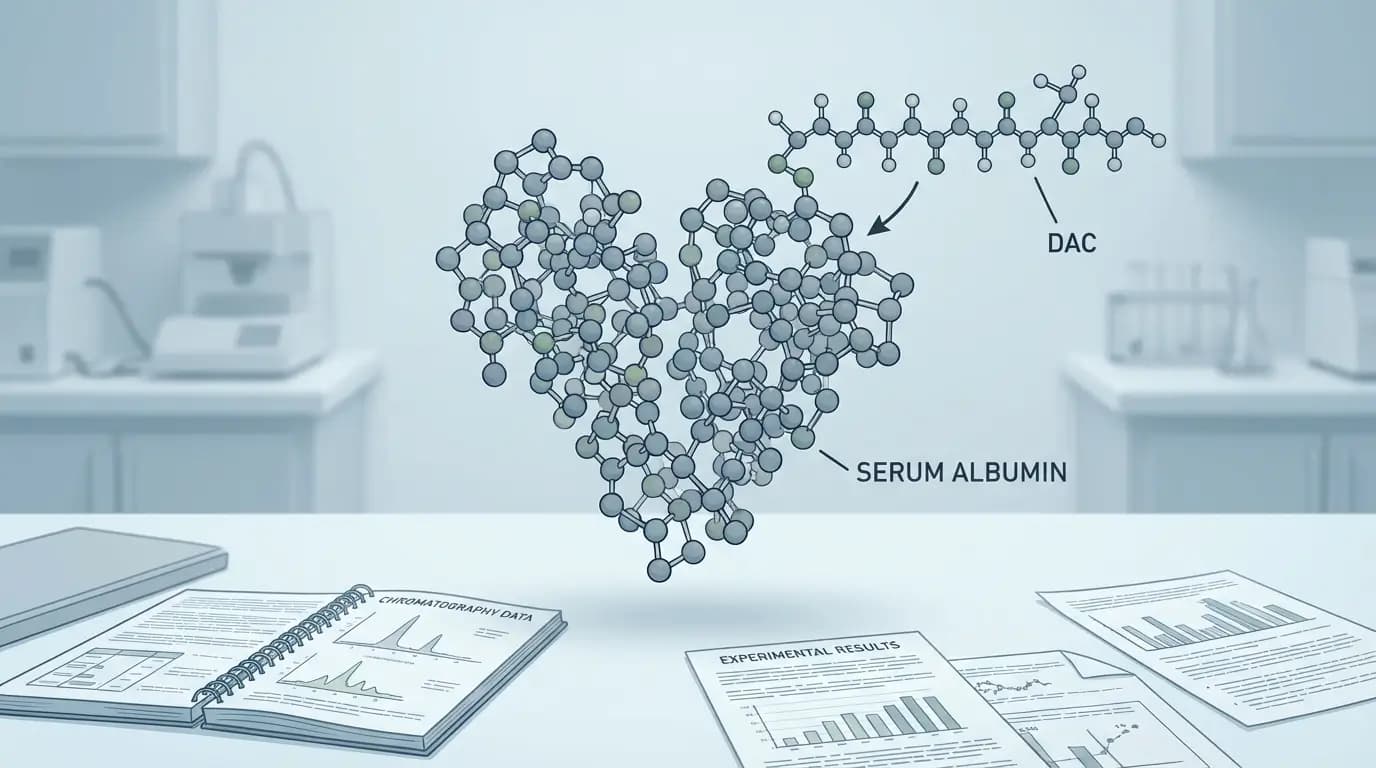

Peptides for tissue repair are discussed across cosmetic science, materials research, and laboratory peptide literature. However, the same phrase can describe very different substances, goals, and evidence levels. A cosmetic signal peptide in a face serum, a collagen peptide ingredient in food research, and a laboratory peptide sold with a certificate of analysis belong to different categories, even when online sources link all three to repair language.
Because of that overlap, this topic often becomes confusing for beginners. Some pages mix skincare language with injury-recovery language. Others move from cell or animal findings to broad outcome claims without explaining the gap between early-stage research and established human data. Therefore, the best way to read the topic is to separate peptide type, research model, quality documentation, and compliance context before judging any claim.
What people mean by peptides for tissue repair
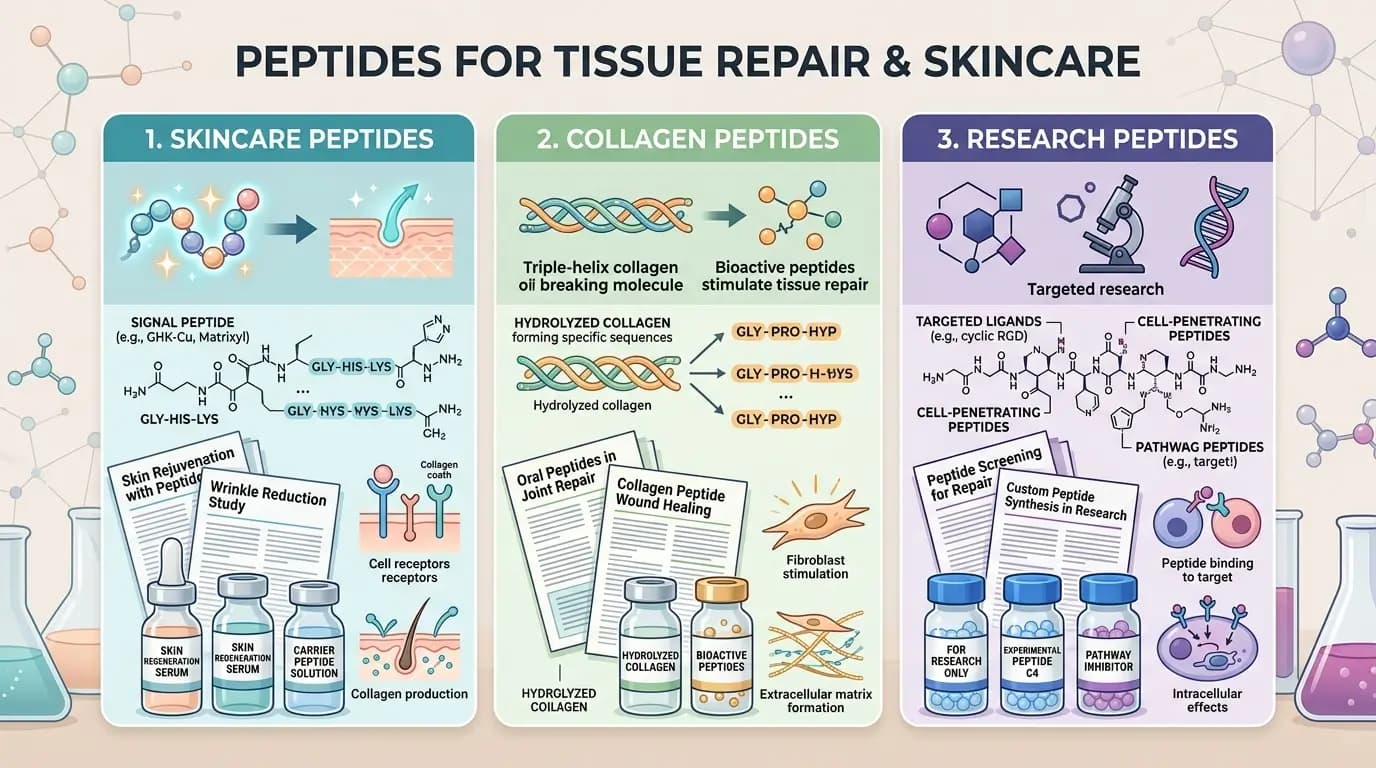
When people search for peptides for tissue repair, they are usually pointing to one of three buckets. Firstly, they may mean skincare peptides used in cosmetic formulations. Secondly, they may mean collagen peptides discussed in food science and skin-structure research. Thirdly, they may mean research peptides studied in laboratory settings for signaling, extracellular matrix remodeling, angiogenesis, or soft-tissue regeneration. These buckets overlap in language, yet they differ sharply in formulation, documentation, and evidence base.
The difference between skincare peptides, collagen peptides, and research peptides
Skincare peptides are usually positioned as cosmetic ingredients. In that setting, the focus is often on barrier appearance, texture, hydration support, collagen-related signaling, and formula design. Common categories include signal peptides, carrier peptides such as copper peptide complexes, and neurotransmitter-mimicking peptides used in cosmetics research.
Collagen peptides sit in a different category. They are commonly discussed in food-derived peptide research and in studies examining skin properties, connective tissue structure, and extracellular matrix support. However, collagen peptides do not substitute for cosmetic signal peptides, and neither category replaces the specialized laboratory peptides discussed in regeneration research.
Research peptides form the third bucket. These are the compounds most often discussed in laboratory catalogs, orthopaedic review papers, peptide hydrogel studies, and cell-signaling research. Yet the strongest wording in the literature usually stays cautious, because many of these findings come from in vitro systems, biomaterial models, or animal work rather than large human datasets.
Why repair claims can refer to very different uses and outcomes
Repair claims sound simple, but they can point to very different endpoints. For example, one paper may examine scratch-assay cell migration, another may measure collagen deposition in animals, and another may look at skin hydration or elasticity in people using collagen products. These are not identical outcomes, and they should not be combined into one broad promise.
Many online pages use the same wording for cosmetic appearance, post-exercise recovery, post-procedure care, and soft-tissue research. Consequently, careful classification is more important than catchy wording.
How peptides are linked to tissue repair and recovery
Peptides are often described as signaling molecules because short amino-acid sequences can interact with receptors, enzymes, immune pathways, or structural processes that shape how tissues respond after stress or damage. In research settings, that usually means looking at inflammation resolution, cell migration, angiogenesis, fibroblast behavior, extracellular matrix deposition, and scaffold-guided regeneration. However, a plausible pathway does not automatically establish a reliable real-world outcome.
Their role in tissue signaling, inflammation, and repair pathways
A recurring theme in peptide research is pathway modulation. Some peptides are examined for how they affect inflammatory mediators. Researchers study others for how they influence fibroblasts, keratinocytes, endothelial cells, or collagen-related remodeling. In materials research, scientists also explore self-assembling peptides and peptide hydrogels because they can create structured microenvironments that support cell attachment and organized tissue formation.
Early-stage repair involves hemostasis and inflammatory signaling, while later stages involve proliferation, angiogenesis, matrix organization, and remodeling. Therefore, researchers increasingly focus on stage-specific systems rather than one-size-fits-all repair claims.
Why recovery support is not the same as proven human repair
Recovery language is much broader than evidence language. A product can be discussed in relation to recovery, soreness, skin appearance, or tissue support without having strong proof across all those areas. Moreover, even when a peptide affects a biological marker in vitro or in animals, the same pattern may not carry over to diverse human settings with different injuries, formulations, exposures, and quality standards.
Good interpretation asks four questions. What exact peptide was studied? In what model? By what route or formulation? And against which endpoint? Without those details, “supports repair” can become a vague statement with little real meaning.
What current research says about peptides for tissue repair

The current literature shows active interest in peptides for tissue repair across skin models, soft-tissue regeneration, biomaterials, orthopaedics, and cosmetic science. Reviews published in 2024, 2025, and 2026 describe promising directions, especially for matrix remodeling, angiogenesis, antimicrobial action in dressings, and scaffold-based regeneration. At the same time, those same reviews note that evidence quality varies widely by peptide class and by research model.
Research themes involving tissue repair, recovery, and regeneration
Several themes appear again and again. Skin-focused peptide science explores peptides in cosmetic formulations, wound dressings, and barrier-support systems. Another is orthopaedic or connective-tissue research, where papers discuss tendons, ligaments, muscle-adjacent soft tissue, and scaffold-assisted regeneration. A third theme is peptide hydrogel design, which aims to combine structure, signaling, and controlled local microenvironments in one platform.
Food-derived bioactive peptides also appear in this field, but this branch of the literature uses a very different sourcing and formulation context than catalog-style research peptides.
Limits of the evidence and why many claims remain preliminary
A large share of peptide repair literature is still early-stage lab work. Reviews on ligaments and tendons, wound dressings, and soft-tissue regeneration repeatedly note that many encouraging signals come from cell studies, biomaterial studies, or animal models, while robust human evidence remains far more limited.
Another limit is heterogeneity. Different studies use different peptide sequences, concentrations, materials, delivery systems, endpoints, and comparison groups. As a result, it is hard to compare one paper with another or to generalize a single finding into a broad statement. Overall, the literature is interesting, but it is not a license for sweeping promises.
Common repair contexts where peptides are discussed
The phrase peptides for tissue repair appears in more than one context, and each one deserves separate interpretation.
Context | Typical peptide type | Common research focus | Evidence profile |
|---|---|---|---|
Cosmetic skincare | Signal peptides, carrier peptides, copper-peptide systems | Barrier appearance, collagen-related signaling, formula performance | Often ingredient-level and formulation-specific |
Food-derived collagen research | Collagen peptides | Skin properties, connective tissue support, matrix-related markers | Mixed, with variable study quality |
Laboratory repair research | Specialized research peptides, antimicrobial peptides, peptide hydrogels | Cell migration, angiogenesis, matrix remodeling, scaffold design | Frequently early-stage lab work |
Orthopaedic soft-tissue research | Research peptides, peptide scaffolds | Tendon, ligament, muscle-adjacent tissue, local regeneration models | Early-stage and heterogeneous |
The same umbrella phrase can describe cosmetic ingredients, food-derived peptides, and specialized laboratory compounds, even though the research questions are very different.
Skin repair, collagen support, and cosmetic recovery
Skin is one of the most visible peptide categories online. Cosmetic science papers discuss signal peptides, carrier peptides, and copper-peptide systems in relation to skin structure, moisture, firmness, and barrier appearance. Meanwhile, broader wound-dressing and antimicrobial-peptide research examines how peptide systems may interact with inflammation resolution, keratinocyte migration, and local tissue remodeling in model systems.
Collagen peptides also enter this conversation, especially in research on skin elasticity and hydration. However, even meta-analytic work in this area shows that findings can vary by funding source, product type, and study design.
Muscle, joint, ligament, and post-injury recovery discussions
Soft-tissue and orthopaedic discussions attract strong online interest because they connect peptide language with return-to-function narratives. Review papers covering ligaments, tendons, and broader soft-tissue repair describe activity in this area, particularly around matrix remodeling, collagen organization, vascular signaling, and scaffold-supported regeneration. However, these papers also emphasize that the evidence base is still heavily weighted toward animal and laboratory work.
A peptide discussed in a tendon review may be highly specific to an animal model, a local biomaterial system, or a narrow mechanistic endpoint. Consequently, broad online language about “fast recovery” or “rapid repair” often says more about marketing than about evidence quality.
Risks, adverse events, and major uncertainties
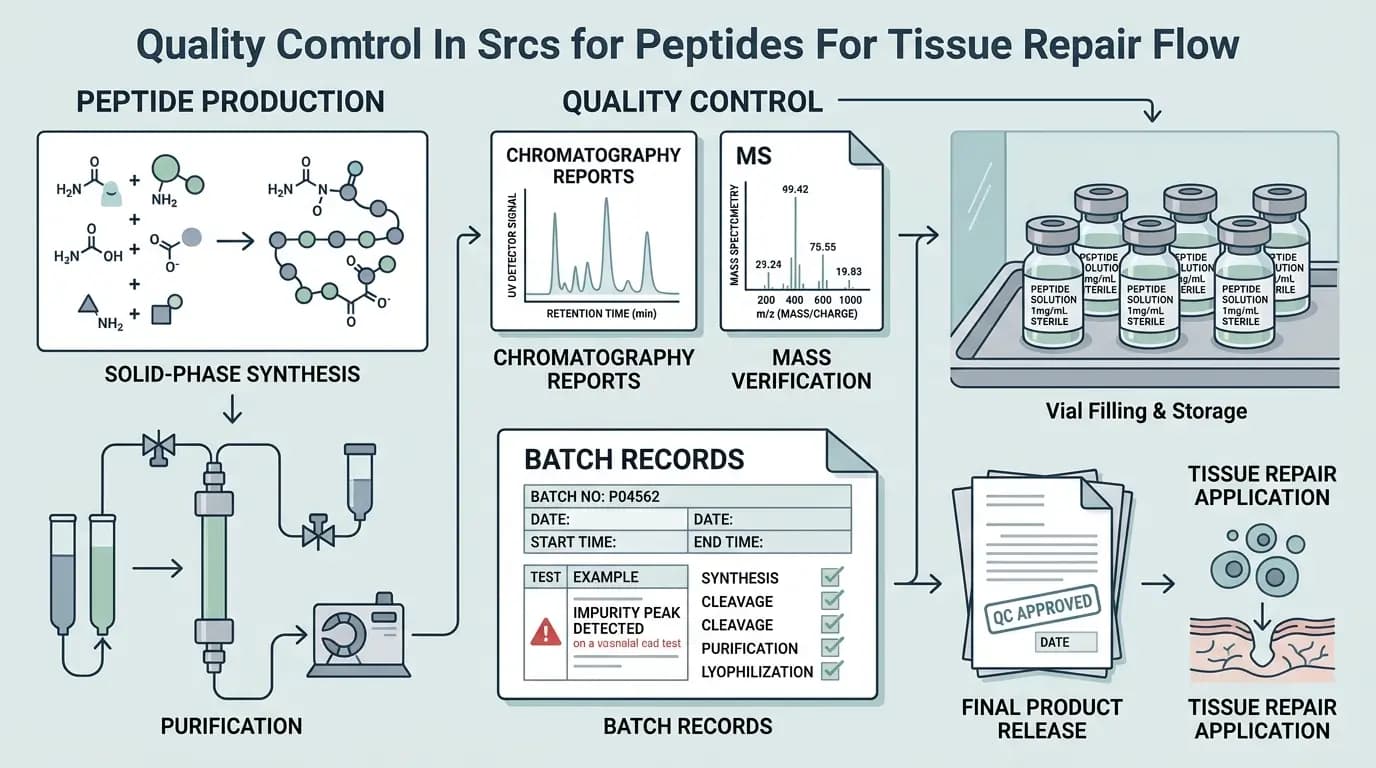
Any serious discussion of peptides for tissue repair must also cover uncertainty. Peptide quality can vary. Impurity profiles matter. Route-specific or formulation-specific concerns may change the risk picture. This is why regulatory agencies and journal authors pay close attention to peptide-related impurities, aggregation, characterization complexity, and gaps in human data.
Risk concerns, product quality issues, and unverified formulations
The FDA maintains a current page on bulk drug substances used in compounding that may present significant risks, and that page includes multiple peptides or peptide-related compounds discussed online for repair or recovery purposes. The agency highlights concerns such as immunogenicity, peptide-related impurities, characterization complexity, limited human data, and, in some cases, reported serious adverse events.
That point matters beyond regulation. In peptide research, purity percentage alone is not the whole story. Identity testing, impurity assessment, lot consistency, storage conditions, handling controls, and batch documentation all shape whether a material is suitable for credible laboratory work. Therefore, transparent records are more meaningful than vague promotional phrasing.
Why exaggerated recovery promises can be misleading
Exaggerated repair language usually follows a pattern. It starts with a real mechanism, adds a selective animal or cell result, removes the study limits, and ends with a near-certain promise. However, the scientific record rarely supports that leap. Reviews on soft-tissue repair, wound-focused peptide systems, and orthopaedic peptide use all point to promise, but they also point to evidence gaps and unresolved questions.
In addition, some products are sold online with research labeling while the surrounding sales language clearly pushes personal-use intent. FDA has specifically warned that some unapproved products have been falsely labeled “for research purposes” while being sold directly to consumers with personal-use directions. In other words, a disclaimer does not neutralize risky intent.
Legal, compliance, and sports-related considerations
Peptide regulation is not one single topic. It can involve manufacturing standards, compounding rules, product classification, advertising claims, sports rules, and market-specific restrictions. Therefore, a peptide can be widely discussed online while still sitting in a high-risk zone for sales language, personal-use implication, or competition rules.
Research use only versus products marketed for human use
A research-use label is only credible when the entire page supports that position. That means no disease language, no personal-use directions, no rapid-outcome promises, and no wording that turns a catalog page into a consumer health pitch. FDA has already stated that some products were falsely labeled for research while being sold directly for human use, which shows why overall page intent matters more than a footer disclaimer.
For a research-focused company, the clearer path is technical description, lot-level documentation, storage information, analytical methods, purity data, and neutral summaries of published literature. Avoid outcome promises, avoid personal-use framing, and keep the tone aligned with laboratory sourcing rather than wellness marketing.
Why repair and performance claims create added compliance risk
Repair language can already create sensitivity. When that language is combined with body-change claims, sports framing, or post-injury performance language, the compliance risk becomes even higher. WADA’s 2026 Prohibited List remains in force and continues to include peptide hormones, growth factors, related substances, and mimetics in the S2 category. Accordingly, athlete-facing marketing creates an extra layer of risk even before broader advertising rules are considered.
Companies should avoid athlete targeting, avoid recovery-to-performance storytelling, and avoid language that could be read as helping around competition restrictions.
How to evaluate claims about peptides for tissue repair
A good reading framework can filter most weak claims in minutes. Instead of starting with testimonials or social media clips, start with documentation and study design. Then move outward to formulation details, model relevance, and compliance context. This order keeps attention on evidence rather than excitement.
Red flags in fast-repair, miracle-repair, and pain-relief marketing
Some warning signs appear again and again:
language that promises unusually rapid repair
claims that one peptide works for skin, joints, tendons, and every recovery context at once
no distinction between cell data, animal data, and human data
no lot number, no chromatogram, and no identity documentation
research wording paired with personal-use suggestions
sports, physique, or body-recomposition framing
before-and-after style storytelling without controlled evidence
A responsible research page usually explains what is being studied and how it is documented. By contrast, a weak page often jumps straight to broad outcomes and emotion-driven promises.
What testing, transparency, and documentation signals matter most
For research-focused sourcing, documentation signals matter more than hype. Sellers provide useful signals, including peptide identity confirmation, purity reporting, method disclosure such as HPLC or mass spectrometry, batch traceability, storage guidance, and a certificate of analysis that matches the material they list. In addition, pages should separate established facts from preliminary literature summaries.
Another key point is consistency. A company that speaks like a laboratory on one page but like a consumer transformation brand on another sends mixed intent signals. Therefore, the strongest catalog communication keeps sequence data, analytical support, and compliance language aligned across the whole site.
Peptides for tissue repair and Peptide Researches

Peptide Researches is best positioned to address this topic as a research-first supplier, not as a performance or wellness brand. In practice, that means presenting peptides for tissue repair through identity, purity, analytical support, storage conditions, and literature context rather than through personal-outcome claims. This approach fits both compliance logic and serious laboratory expectations.
How Peptide Researches supports research-focused sourcing, documentation, and compliance-first communication
A strong research-focused page should make the material easy to evaluate. That includes peptide name, sequence where relevant, molecular weight, purity range, testing methods, handling notes, batch-level documentation, and a neutral explanation of what researchers have investigated in published work. It should also make clear where evidence is preliminary, where data come from non-human models, and where no broad conclusion should be drawn.
Equally important, the communication style should stay consistent. The page should read like a catalog and research overview. It should not drift into pain-relief promises, body-change language, or fast-repair narratives. For a brand in this space, clarity and restraint are part of product integrity.
Conclusion
Peptides for tissue repair is a real research topic, but it is not one simple product category. It includes cosmetic ingredients, collagen-related research, antimicrobial peptide systems, peptide hydrogels, and specialized laboratory peptides, each with its own evidence profile and compliance context. Therefore, the most useful way to approach the subject is to separate mechanism from marketing, early-stage data from established human findings, and documentation from hype.
For Peptide Researches, that distinction matters even more. A strong page on peptides for tissue repair should educate readers, summarize literature carefully, and foreground analytical transparency. It should not promise personal outcomes. Overall, research-first communication is what makes the topic clearer, more credible, and more sustainable for a compliance-focused peptide brand.
References
FDA, overview of compounded peptide-related substances that may present significant risks.
FDA, warning on unapproved products falsely labeled for research while sold for personal use.
WADA, official 2026 Prohibited List coverage and category overview.
Hao et al., 2024, review of bioactive peptides and proteins for tissue repair.
Cushman et al., 2024, review of local and systemic peptide approaches for soft-tissue regeneration.
Kim et al., 2025, narrative review of peptide applications in ligaments and tendons.
Adnan et al., 2025, review of antimicrobial peptides in wound repair and skin regeneration.
Pintea et al., 2025, review of peptides in cosmetic and skin-focused applications.