What Is Peptide Reconstitution?
Peptide reconstitution is a technical term used in laboratory settings to describe the return of a dried peptide material to a liquid state for analytical or experimental work. In most cases, the starting material is a vial of lyophilized peptides, which are supplied as a dry powder or thin film to support handling, transport, and storage. Because many researchers receive peptides in this format, peptide reconstitution becomes a routine part of sample preparation before assays, instrument runs, or stability studies.
For laboratory research use only. Not intended for use in humans or animals. Not intended to diagnose, treat, cure, or prevent any disease.
What peptide reconstitution means
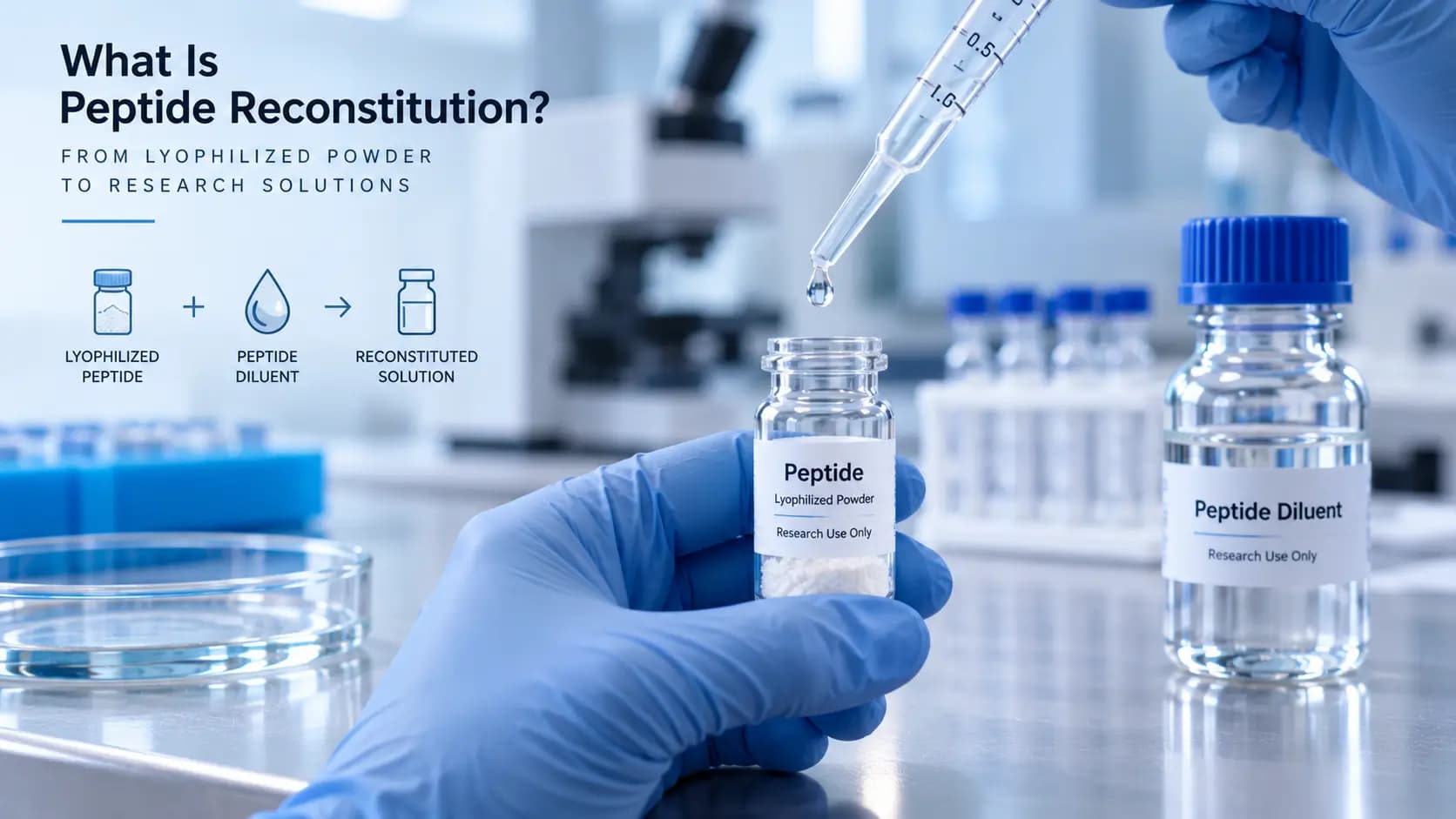
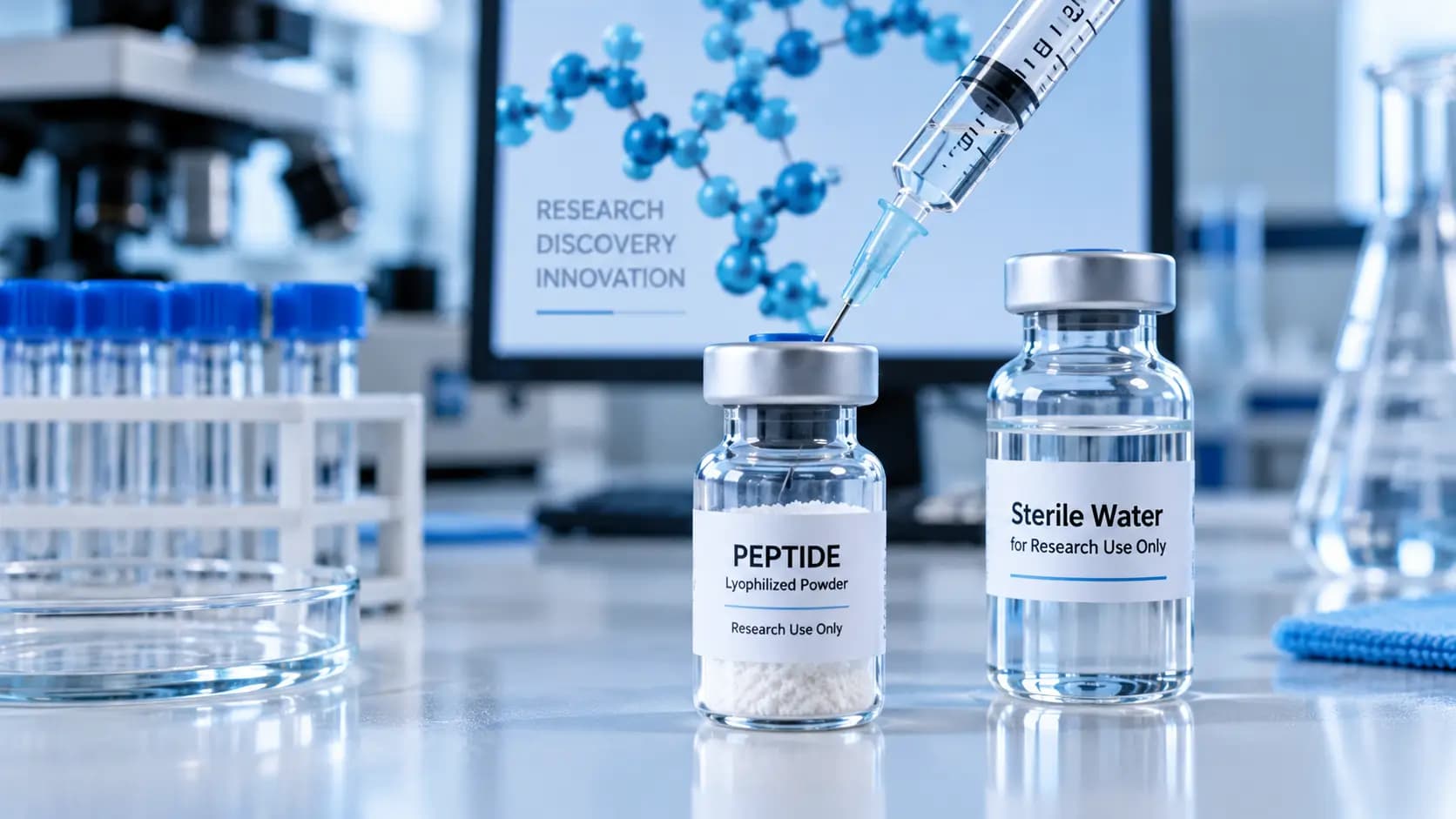
At its core, peptide reconstitution means adding a selected peptide diluent to a lyophilized sample so the material can be dispersed or dissolved for research procedures. However, the exact outcome depends on the peptide sequence, purity profile, hydrophobicity, pH sensitivity, and intended analytical application. Some peptides dissolve readily in aqueous media, whereas others require a more carefully selected solvent system because of aggregation tendencies or limited solubility.
In other words, peptide reconstitution is not just a mixing step. It is a controlled laboratory process that affects concentration accuracy, reproducibility, and sample integrity. When researchers discuss how to reconstitute peptides, they are usually referring to the broader decision framework that includes solvent compatibility, target concentration, container material, and downstream storage conditions.
A simple way to view peptide reconstitution is through the following research-focused elements:
physical transition from dry material to liquid preparation
selection of an appropriate peptide diluent
verification of appearance and homogeneity
documentation of concentration and date
planning for peptide storage after reconstitution
This terminology also helps distinguish dry-state handling from post-solution handling. Accordingly, peptide stability after reconstitution is often discussed separately from dry powder stability, since a dissolved peptide may degrade faster through hydrolysis, oxidation, adsorption, or microbial contamination.
Why reconstitution is used in research workflows
Research peptide reconstitution is used because many analytical methods require a peptide in solution rather than in a dry vial. For example, chromatography, mass spectrometry, cell-free binding studies, and reference standard preparation typically begin with a dissolved sample. Therefore, peptide reconstitution serves as the bridge between long-term storage format and active laboratory use.
Lyophilized peptides are often preferred for shipment and inventory management because the dry state can reduce some degradation pathways. However, once a study begins, reconstituting peptides allows the sample to be aliquoted, diluted, filtered if needed, and introduced into validated workflows. Consequently, the quality of peptide reconstitution can influence repeatability across batches and time points.
The table below summarizes why peptide reconstitution matters in common research contexts:
Research need | Why peptide reconstitution matters |
|---|---|
Concentration preparation | Supports preparation of defined stock solutions |
Instrument analysis | Enables injection or loading into analytical systems |
Method development | Allows comparison of solvent systems and stability windows |
Sample sharing | Makes aliquoting easier across teams or experiments |
Short-term use | Converts stored dry material into a workable laboratory sample |
Researchers also use peptide reconstitution to evaluate solution behavior. For instance, a peptide may appear stable as a dry solid but show precipitation after dilution or prolonged cold storage. Hence, reconstituting peptides is not only preparative but also informative, since it reveals practical characteristics that may affect assay design.
Finally, peptide reconstitution should always remain within a scientific handling context. The purpose is to support controlled laboratory analysis, not consumer-facing use. That distinction is important because intent matters in compliance, editorial review, and product education.
Understanding Lyophilized Peptides
Lyophilized peptides are the standard starting format for many laboratory peptide products. The dry presentation helps preserve material quality during shipping and storage, and it simplifies weighing, packaging, and batch control. Because peptide reconstitution begins with this dry form in many cases, understanding lyophilization is essential for both beginners and experienced researchers.
Definition of lyophilization
Lyophilization is a dehydration process commonly called freeze-drying. During this process, a peptide solution is first frozen and then exposed to reduced pressure so that ice is removed by sublimation rather than by conventional liquid evaporation. As a result, the remaining material is a dry solid with low residual moisture, which can improve handling stability compared with a fully hydrated sample.
This process is widely used for sensitive biomolecules because it can reduce exposure to heat. Unlike some drying methods, lyophilization is designed to preserve structural integrity as much as possible during solvent removal. Nevertheless, the final behavior of the product still depends on sequence-specific properties, formulation conditions, and residual salts or buffers.
Researchers often receive lyophilized peptides in one of several visual forms:
fluffy white powder
compact cake
thin film on the vial wall
slightly translucent residue
off-white or faintly tinted solid, depending on composition
These differences do not automatically indicate a quality problem. However, they may affect how the material wets and disperses during peptide reconstitution. A peptide that forms a dense film, for example, may require more time for complete dissolution than a porous cake.
Characteristics and advantages of lyophilized peptides
Lyophilized peptides are widely used because they are practical for research inventory systems. First, the reduced water content can help limit hydrolytic degradation while the peptide remains unopened and correctly stored. Additionally, dry-state packaging can support more consistent transport conditions than a pre-made liquid sample, which may be more vulnerable to temperature fluctuation or container adsorption.
Another advantage is concentration flexibility. When researchers perform peptide reconstitution, they can prepare a stock solution that matches the needs of a specific assay rather than relying on a one-size-fits-all liquid product. Therefore, lyophilized peptides offer a useful balance between storage convenience and experimental adaptability.
The following table outlines common characteristics of lyophilized peptides:
Characteristic | Research relevance |
|---|---|
Low moisture content | May reduce some degradation pathways |
Compact storage format | Easier inventory management and shipping |
Customizable reconstitution volume | Supports assay-specific stock preparation |
Visual variability | May affect wetting and dissolution behavior |
Sequence-dependent solubility | Requires informed diluent selection |
Despite these advantages, lyophilized peptides are not automatically stable under all conditions. Heat, repeated opening, moisture exposure, and light sensitivity can still affect quality over time. Moreover, salts from purification or counterions associated with the peptide may influence how the dried material behaves once reconstituting peptides begins.
A key point for beginners is that “lyophilized” describes the physical preparation method, not a guarantee of unlimited stability. In fact, peptide stability after reconstitution often differs substantially from dry-state stability. Once solvent is introduced, additional degradation routes can become relevant, including deamidation, oxidation, adsorption to surfaces, and microbial growth in non-preserved systems.
Researchers should also remember that not every peptide dissolves the same way. Some highly hydrophilic sequences enter solution quickly in water-based media, whereas hydrophobic or aggregation-prone sequences may require alternative solvent strategies. Consequently, peptide reconstitution planning should begin before the vial is opened, with attention to sequence data, manufacturer notes, concentration targets, and storage plans.
In research peptide reconstitution, the dry format offers one more advantage, namely the ability to aliquot after dissolution according to project needs. This can reduce repeated freeze-thaw exposure of the same solution. Furthermore, it helps laboratories preserve traceability by linking each aliquot to a lot number, preparation date, and analytical purpose.
Competitive sport organizations may restrict certain substances. Users are responsible for checking applicable rules.
Criteria for Selecting Research Diluents
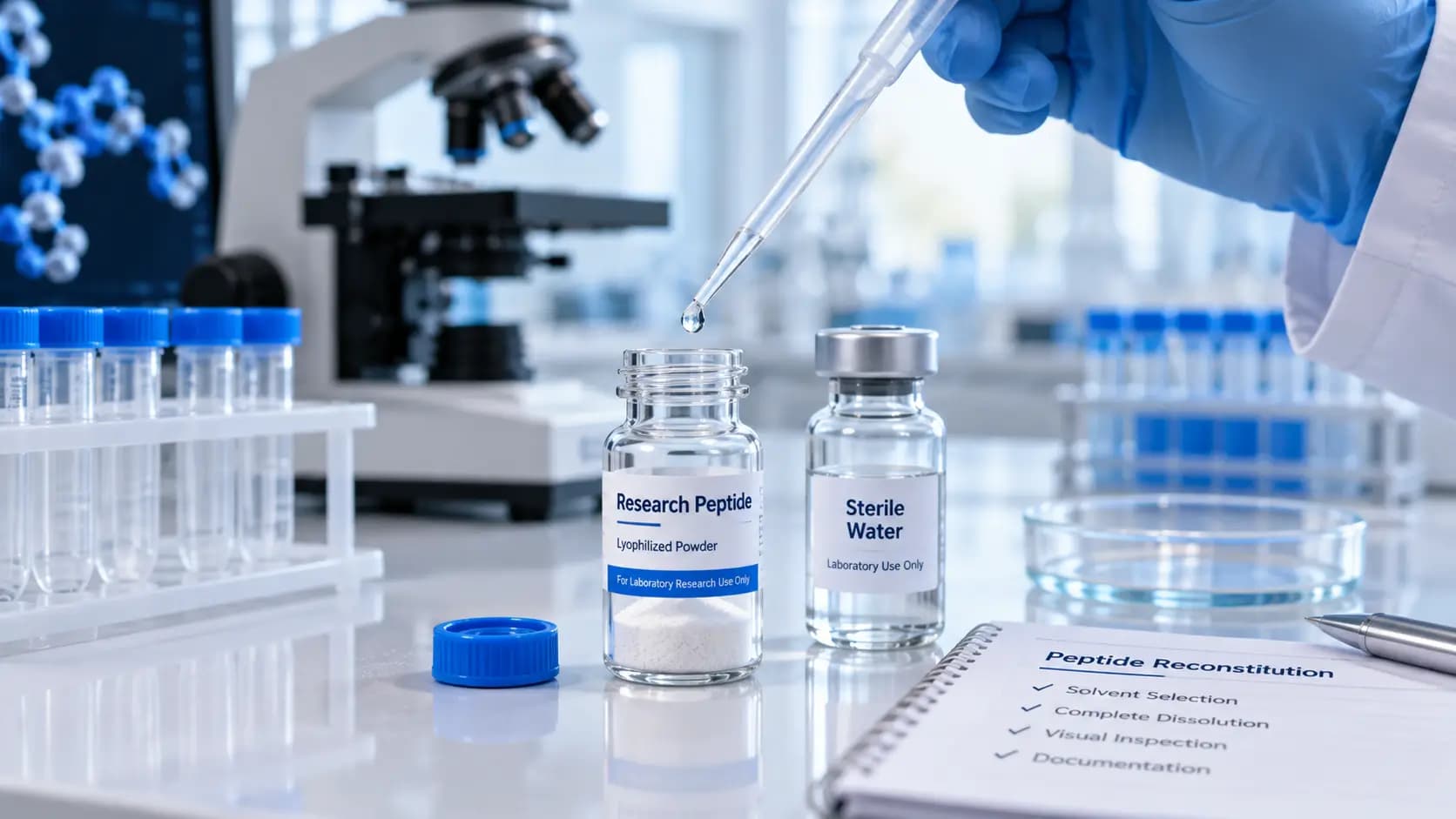
Choosing a peptide diluent is one of the most important decisions in peptide reconstitution. The diluent affects solubility, clarity, concentration accuracy, and compatibility with later analytical steps. Because different peptides behave differently in solution, researchers should treat diluent selection as a sequence-specific and method-specific decision rather than a fixed rule.
Factors to consider when choosing a diluent
Several technical factors shape how to reconstitute peptides in a laboratory context. First, the amino acid composition matters because charged, polar, and hydrophobic residues influence how easily the peptide enters solution. For instance, a peptide rich in hydrophobic residues may resist immediate dissolution in plain aqueous media, whereas a more polar sequence may dissolve readily.
Second, the intended concentration is important. A peptide may appear fully soluble at a low concentration but show turbidity or precipitation at a higher stock concentration. Therefore, peptide reconstitution planning should account for the final concentration required for the assay, not just whether the sample can dissolve at all.
Third, researchers should consider downstream compatibility. A solvent that helps initial dissolution may not be ideal for every analytical platform. Accordingly, the best peptide diluent is often the one that balances solubility with method requirements such as pH range, ionic strength, detector compatibility, and sample matrix constraints.
Useful decision points include:
peptide sequence and hydrophobicity
target stock concentration
pH sensitivity
compatibility with chromatography or mass spectrometry
container adsorption risk
short-term and long-term peptide storage after reconstitution
Overview of common research diluents
Common research diluents include sterile water, bacteriostatic water, buffered aqueous systems, and selected organic co-solvents used in small proportions. However, no single option is appropriate for all peptides. Researchers often begin with the least disruptive system that is compatible with the peptide’s known solubility profile and the intended analysis.
Sterile water is often discussed because it is simple and broadly available in laboratory settings. Bacteriostatic water includes a preservative component and is sometimes considered when repeated vial access is anticipated in a research environment. Buffered systems may be used when pH control is important, while certain organic modifiers may support difficult hydrophobic sequences. For a more focused discussion of how bacteriostatic water fits peptide preparation workflows, see our bac water for peptides guide.
The table below provides a neutral overview:
Diluent type | Typical research rationale | Key consideration |
|---|---|---|
Sterile water | Simple aqueous medium for many peptides | Limited preservation after opening |
Bacteriostatic water | Preserved aqueous medium for repeated access contexts | Preservative may affect some assays |
Buffered solution | Supports pH control | Buffer salts may alter downstream analysis |
Water with small co-solvent fraction | May help with difficult solubility profiles | Requires method compatibility review |
In peptide reconstitution, clarity alone does not prove full molecular stability. A solution can appear clear yet still undergo slow chemical change over time. Hence, researchers should distinguish between immediate dissolution and longer-term peptide stability after reconstitution.
Bacteriostatic water vs sterile water
Bacteriostatic water and sterile water are often compared in discussions of reconstituting peptides, yet the distinction is straightforward in laboratory terms. Sterile water is purified water prepared to meet sterility standards, while bacteriostatic water contains an added preservative intended to limit microbial growth in multi-use contexts. Because of that preservative, the two are not analytically interchangeable in every workflow. For a deeper overview of composition, storage, shelf life, and repeated-entry considerations, see our guide to bacteriostatic water.
Bacteriostatic water may be useful where repeated vial access is part of a defined laboratory process. However, the preservative can introduce a variable that matters for sensitive assays, reference material preparation, or compatibility testing. On the other hand, sterile water offers a simpler matrix, although it does not provide the same preservative feature after opening.
A concise comparison appears below:
Feature | Bacteriostatic water | Sterile water |
|---|---|---|
Preservative present | Yes | No |
Multi-access context | Often considered | Less suited without added controls |
Matrix simplicity | Lower | Higher |
Assay interference risk | Potentially higher | Often lower |
Use decision | Method-dependent | Method-dependent |
Because peptide reconstitution is closely tied to analytical goals, the choice between these two options should be documented in laboratory records. Moreover, researchers should review manufacturer notes, certificate data, and internal method requirements before selecting a peptide diluent. That approach supports consistency across batches and reduces avoidable variability in research peptide reconstitution.
Stability After Reconstitution
Peptide stability after reconstitution is a major concern in laboratory work because the dissolved state can introduce degradation pathways that are less active in the dry state. Once solvent is added, the sample may become more susceptible to hydrolysis, oxidation, adsorption to container surfaces, aggregation, and contamination. For that reason, peptide storage after reconstitution deserves as much planning as the initial peptide reconstitution step.
Guidelines for storage before reconstitution
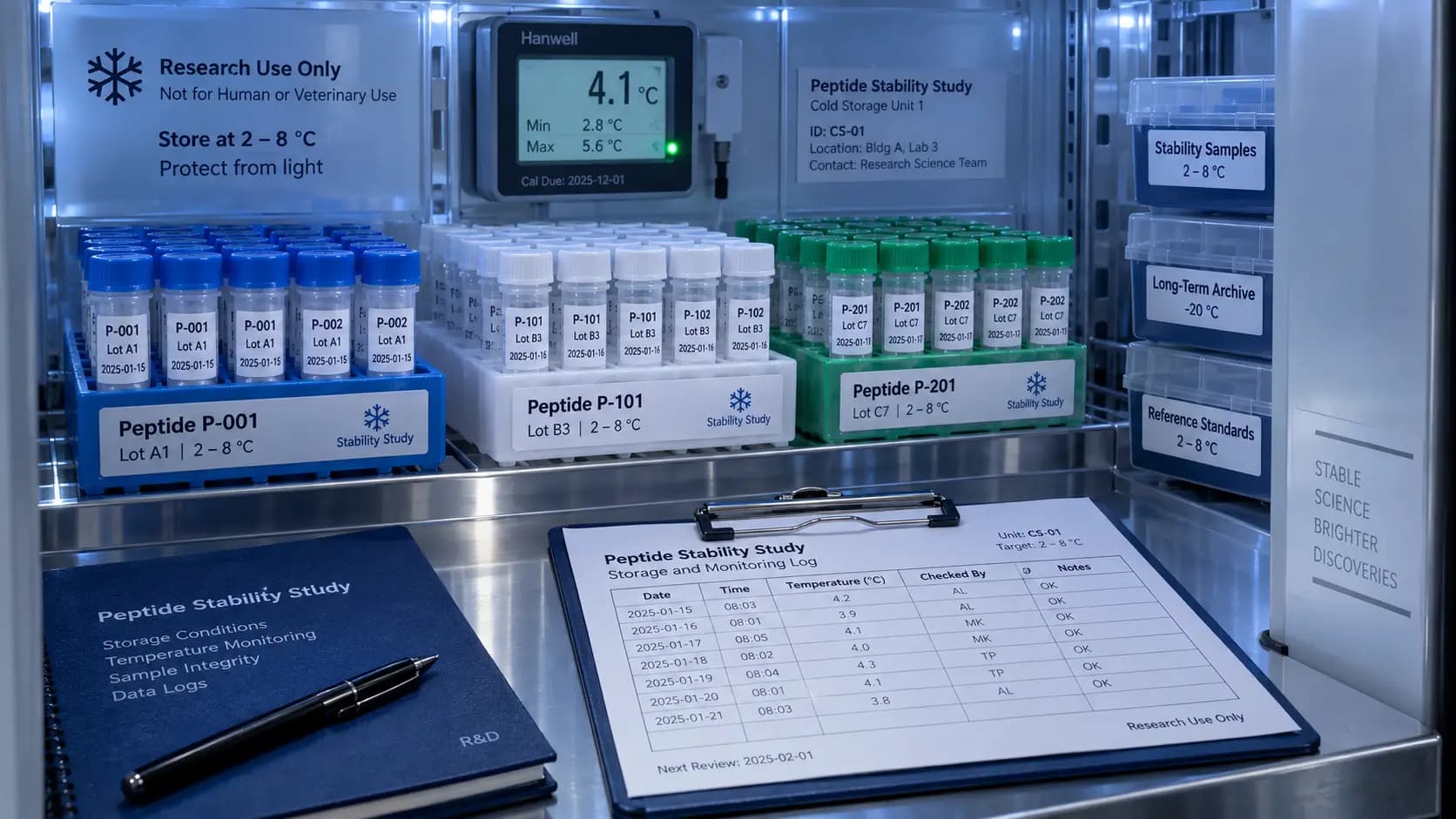
Before peptide reconstitution, lyophilized peptides are generally stored according to manufacturer recommendations and the known sensitivity of the sequence. In many research settings, the dry material is kept sealed, protected from moisture, and maintained at low temperature to limit degradation. However, exact storage conditions can differ based on purity, formulation, and expected storage duration.
Researchers should minimize unnecessary vial opening because repeated exposure to ambient humidity can affect dry-state quality. Additionally, labeling should remain intact so that lot number, mass, receipt date, and storage conditions are always traceable. This is especially important when multiple similar peptide products are held in the same inventory system.
Good pre-reconstitution practices include:
keeping vials sealed until needed
limiting exposure to room humidity
storing under recommended temperature conditions
protecting light-sensitive materials from direct light
documenting receipt and handling dates
These steps support better peptide reconstitution later because the starting material is less likely to have absorbed moisture or undergone unnoticed degradation.
Factors influencing stability post-reconstitution
After reconstituting peptides, several variables influence how long the sample remains suitable for research use. Temperature is one of the most obvious factors, since warmer conditions can accelerate chemical change. Nevertheless, temperature is only part of the picture, because pH, solvent composition, peptide concentration, oxygen exposure, and container surface interactions can also affect stability.
Sequence chemistry matters greatly. Peptides containing residues prone to oxidation or deamidation may require tighter control of handling time and storage environment. Likewise, hydrophobic peptides may aggregate during storage even when they initially appear dissolved, which can alter effective concentration and assay behavior.
The table below summarizes common stability variables:
Factor | Possible effect on dissolved peptide |
|---|---|
Temperature | Faster degradation at higher temperatures |
pH | Can accelerate hydrolysis or structural change |
Oxygen exposure | May increase oxidation risk |
Light exposure | Can affect light-sensitive sequences |
Concentration | May influence aggregation or adsorption |
Container material | Can contribute to surface binding losses |
Another important factor is repeated freeze-thaw exposure. Although freezing may be useful for longer storage in some research contexts, repeated thawing and refreezing can stress certain peptide solutions. Consequently, laboratories often use aliquoting strategies after peptide reconstitution so that each portion is accessed only when needed.
Best practices for storage after reconstitution
Peptide storage after reconstitution should be guided by written laboratory procedures, manufacturer information, and internal stability data whenever available. A common research principle is to prepare only the amount needed for near-term use and to aliquot the remainder into clearly labeled containers. This reduces repeated access to the same vial and can help preserve consistency between experiments.
Researchers should also inspect solutions visually during storage. For example, new cloudiness, visible particulates, color change, or unexpected film formation may indicate that the sample should be reviewed before use in analytical work. However, visual inspection is only a preliminary check, since some forms of degradation are not visible.
A practical storage checklist is useful:
record the date of peptide reconstitution
record the peptide diluent used
assign a concentration and unit notation
divide into single-use or limited-use aliquots when appropriate
store under documented temperature conditions
avoid repeated freeze-thaw cycles where possible
In peptide stability after reconstitution discussions, one of the most common mistakes is assuming that all peptides behave similarly once dissolved. In fact, stability can vary widely between sequences and solvent systems. Therefore, research peptide reconstitution should be paired with stability verification whenever the sample is intended for extended storage, repeated analytical runs, or comparative studies.
For beginners, the most reliable mindset is conservative handling. Use the dry form for as long as practical, reconstitute only when needed for a defined experiment, and document every condition that could affect interpretation later. That approach improves reproducibility and makes it easier to compare data across lots, operators, and time points.
Safety and Handling Procedures
Peptide reconstitution should be performed within a controlled laboratory environment using established sample-handling procedures. Although the process may seem simple, contamination, labeling errors, and unsuitable container practices can compromise analytical quality. Therefore, safe and disciplined handling is central to reliable research peptide reconstitution.
Contamination risks during reconstitution
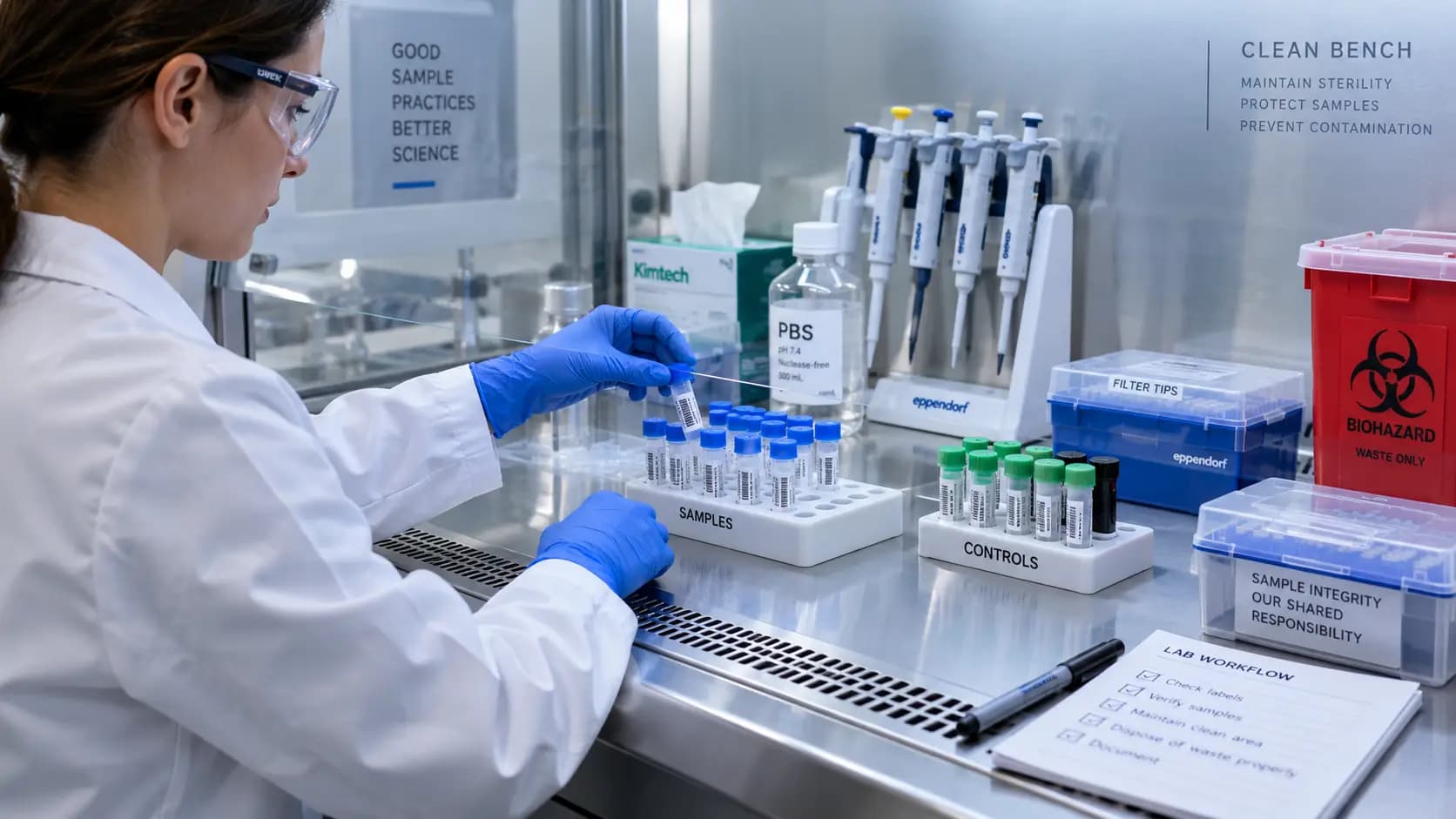
Contamination can enter during multiple stages of peptide reconstitution. The most obvious sources are repeated vial access, non-controlled work surfaces, airborne particulates, and contact with non-validated tools or containers. However, contamination also includes less visible issues such as carryover from previous compounds, microbial introduction into aqueous solutions, or trace residues from incompatible plastics.
Because reconstituting peptides often involves small masses and low-volume stock solutions, even minor contamination can affect downstream results. For instance, an introduced impurity may interfere with chromatographic peaks, alter pH, or complicate mass spectrometric interpretation. Accordingly, contamination control is not only a cleanliness issue but also a data integrity issue.
Common contamination risks include:
touching vial openings or inner caps
using non-dedicated or non-clean transfer tools
leaving containers open longer than necessary
repeated sampling from the same solution
storing solutions in unlabeled or poorly sealed tubes
Best practices for safe handling of peptides
Best practices for peptide reconstitution begin with preparation before the vial is opened. Researchers should confirm the identity of the material, review sequence or product notes, verify the selected peptide diluent, and prepare appropriately clean containers for any aliquots. Afterwards, the process should be documented in a way that supports traceability and repeatability.
During handling, laboratories should use standard contamination-control measures appropriate for their environment. These may include clean benches, dedicated pipetting tools, controlled access to reagents, and validated container types. Furthermore, researchers should avoid unnecessary agitation if the peptide is known to foam, adsorb, or aggregate under mechanical stress.
The following mini-table summarizes practical handling points:
Handling area | Good laboratory practice |
|---|---|
Work surface | Use a clean, organized preparation area |
Reagents | Verify identity and lot before use |
Containers | Use compatible, clearly labeled vessels |
Access frequency | Minimize repeated opening and sampling |
Documentation | Record date, concentration, and diluent |
Safe handling also includes waste control and separation of samples. Because peptide reconstitution may be performed alongside other biomolecules or reference materials, cross-contact prevention is important. Consequently, laboratories should separate incompatible materials and maintain clear sample flow from receipt through storage.
Importance of labeling and manufacturer guidance
Labeling is one of the most overlooked parts of peptide storage after reconstitution. A vial that lacks concentration, date, diluent, or lot information can quickly become unusable for serious research because the chain of identity is broken. In addition, unclear labels increase the risk of duplicate preparation, accidental misuse in the wrong assay, or data exclusion during review.
A complete label or linked sample record should include:
peptide name or code
lot or batch identifier
concentration
peptide diluent
date of peptide reconstitution
storage condition
preparer initials or record reference
Manufacturer guidance is equally important because sequence-specific handling notes may affect how to reconstitute peptides in a laboratory workflow. Some products may have known solubility limitations, preferred storage ranges, or sensitivity to repeated freeze-thaw exposure. Therefore, researchers should treat supplier documentation as part of the sample record, not as optional background reading.
In research peptide reconstitution, disciplined labeling and adherence to guidance reduce ambiguity. They also support reproducibility, which is essential when comparing assay runs, transferring methods between teams, or reviewing historical data.
Analytical Limitations and Research Implications
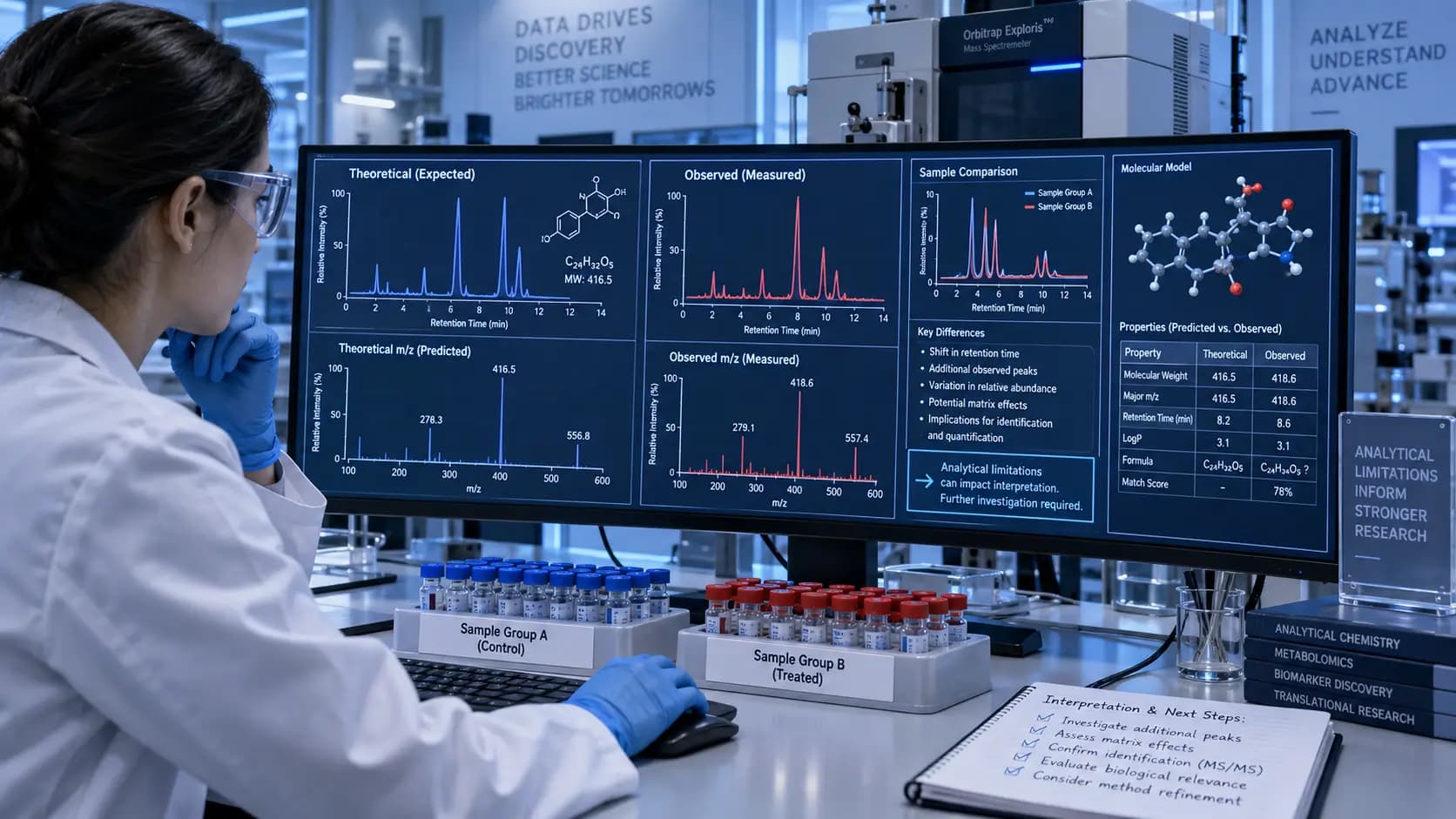
Peptide reconstitution is often described as a preparative task, but it also introduces analytical limitations that can shape data quality. A dissolved peptide is not automatically a fully characterized peptide, and a clear solution does not guarantee chemical uniformity over time. Therefore, researchers should consider the limitations of peptide reconstitution when designing experiments and interpreting results.
Understanding analytical limitations in peptide studies
One limitation is that solubility observations are often qualitative at first. A sample may look dissolved by eye, yet small aggregates, adsorbed fractions, or partial degradation products may still be present. Consequently, visual clarity should not be treated as proof that the nominal concentration fully reflects the bioanalytical or physicochemical reality of the sample.
Another limitation concerns concentration assignment. When reconstituting peptides, the theoretical concentration is usually calculated from labeled mass and added volume. However, actual available concentration may differ if material remains adhered to the vial, if incomplete dissolution occurs, or if the peptide binds to the storage container. Hence, critical studies may require orthogonal confirmation through validated analytical methods.For a deeper discussion of how purity, impurities, and analytical characterization can affect interpretation, see our peptide purity guide.
Important analytical limits include:
visual inspection cannot detect all degradation pathways
theoretical concentration may differ from effective concentration
solvent choice may alter assay background or peak shape
adsorption losses may be sequence- and container-dependent
freeze-thaw history may introduce hidden variability
Additionally, peptide stability after reconstitution is often studied under limited conditions, not under every real-world handling scenario. A stability note from one context may not fully predict behavior in another matrix, concentration range, or storage container. Therefore, extrapolation should be cautious.
Implications for experimental design
Another limitation concerns concentration assignment. When reconstituting peptides, the theoretical concentration is usually calculated from labeled mass and added volume. However, actual available concentration may differ if material remains adhered to the vial, if incomplete dissolution occurs, or if the peptide binds to the storage container. Hence, critical studies may require orthogonal confirmation through validated analytical methods.
Second, experiments should include documentation checkpoints. Researchers can record solution appearance, preparation time, storage condition, aliquot history, and any observed precipitation or color change. In addition, they may compare freshly prepared and stored aliquots to understand how peptide storage after reconstitution affects assay outputs.
The table below links common limitations to design responses:
Limitation | Experimental response |
|---|---|
Uncertain full dissolution | Add verification step or mixing review |
Possible adsorption loss | Evaluate container type and aliquoting plan |
Unknown post-solution stability | Compare fresh and stored samples |
Diluent-dependent assay effects | Test compatibility before main study |
Batch-to-batch variability | Standardize records and preparation workflow |
Finally, research peptide reconstitution should be integrated into quality planning, not treated as an afterthought. Because early preparation choices can influence later measurements, a well-designed workflow includes written solvent rationale, storage logic, and predefined acceptance observations. That approach improves interpretability and helps researchers distinguish true experimental findings from sample-preparation artifacts.
Conclusion
Peptide reconstitution is a foundational laboratory process that begins with understanding lyophilized peptides and extends through diluent selection, documentation, storage, and analytical interpretation. Although the concept sounds simple, peptide reconstitution can influence concentration reliability, sample integrity, and experimental reproducibility. Therefore, researchers should approach reconstituting peptides as a controlled scientific task rather than a casual preparation step.
A strong workflow for research peptide reconstitution includes sequence-aware solvent selection, careful attention to peptide stability after reconstitution, and disciplined peptide storage after reconstitution. Moreover, complete labeling and manufacturer guidance help reduce avoidable variability between operators and time points. In summary, the most useful approach is conservative, documented, and aligned with the actual analytical purpose of the sample.