
HCG peptide is one of the most searched phrases in peptide education, yet many readers are not sure what the term really means. In scientific language, hCG stands for human chorionic gonadotropin, a glycoprotein hormone produced mainly by trophoblast tissue in early pregnancy, and its role is central to early reproductive signaling.
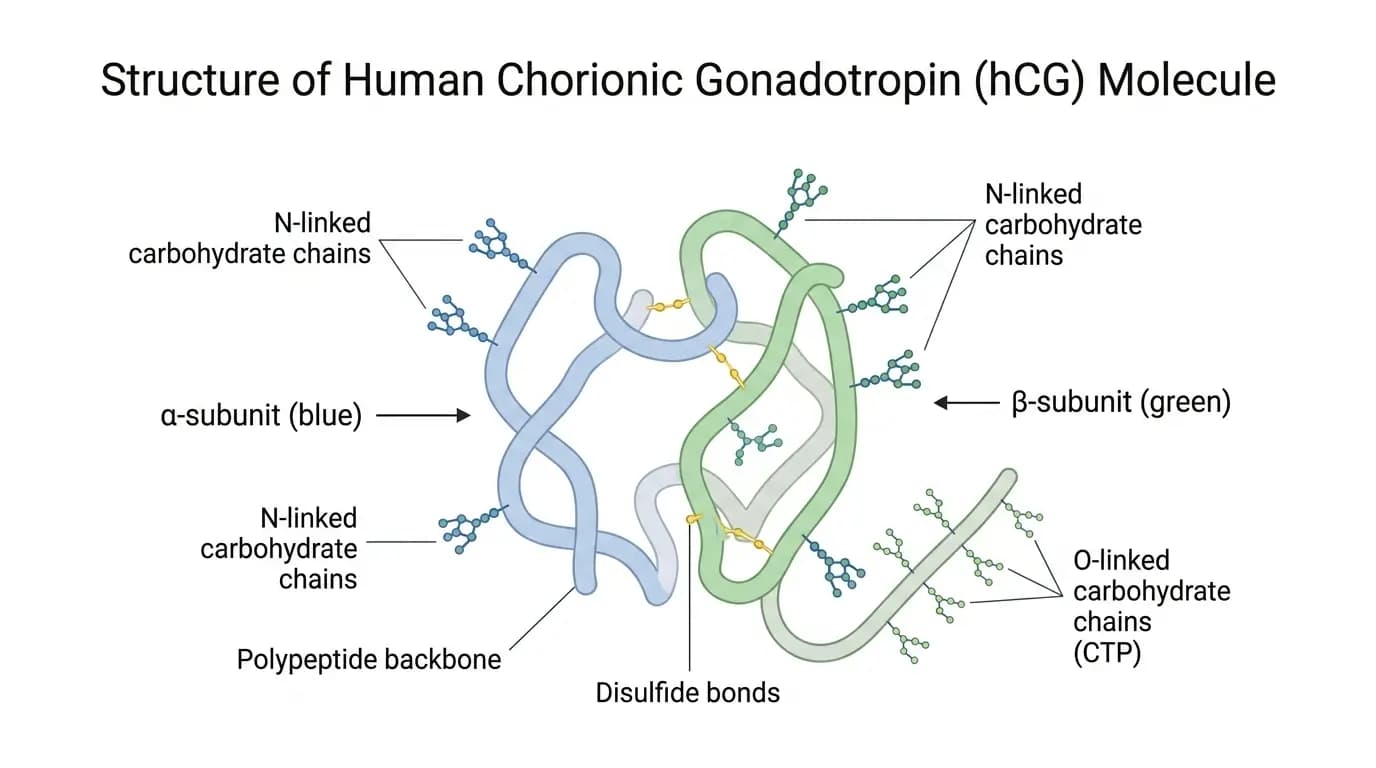
For beginners, the phrase can sound like a small lab-made chain of amino acids. In reality, the molecule is more complex. Protein subunits and carbohydrate groups compose hCG, so it belongs in the broader world of amino-acid-based signaling molecules, but it differs from the short synthetic peptides that many catalogs list.
That distinction matters because HCG peptide appears in many different settings. Some people first see hCG in pregnancy information. Others see HCG peptide in laboratory sourcing pages, hormone discussions, or online forums that use loose wording. As a result, the term often carries more confusion than clarity.
This guide explains HCG peptide from a research-first angle. It covers structure, biological role, testing, supervised reproductive use, online confusion, and compliance issues. Most importantly, it shows why context matters whenever people discuss hCG.
What hCG is and whether it is considered a peptide
Human chorionic gonadotropin as a hormone involved in reproduction
HCG peptide refers to human chorionic gonadotropin, a hormone produced mainly by trophoblast tissue that later contributes to placental development. StatPearls explains that hCG supports the corpus luteum in early pregnancy, which helps sustain progesterone production and maintain the endometrial environment during the earliest phase of gestation.
In other words, this hormone is part of the signaling system that helps early pregnancy continue. Cleveland Clinic likewise describes hCG as a hormone made by the placenta during pregnancy and notes that it rises after conception. Because of that early rise, it is strongly tied to pregnancy detection and assessment.
From a biochemical point of view, researchers describe HCG peptide as a glycoprotein hormone rather than a simple peptide. StatPearls notes that alpha and beta subunits compose hCG, while NCBI physiology material explains that the beta subunit provides structural distinction from related hormones such as luteinizing hormone.
Why hCG is often grouped into peptide-related discussions
People still group HCG peptide with peptides for understandable reasons. Amino acid chains compose the molecule, which acts through receptor binding and signaling pathways and appears in the same scientific conversations as peptide hormones and other biologically active molecules. Therefore, it often shows up in peptide glossaries, product taxonomies, and educational posts.
However, grouping does not mean equivalence. A short research peptide and hCG do not have the same size, structure, or biochemical complexity. Consequently, readers should treat the term as peptide-related language rather than as proof that hCG belongs to the exact same category as smaller peptide compounds.
For a beginner, a useful rule is simple. HCG peptide is peptide-adjacent language, but hCG itself is a glycoprotein hormone with a more elaborate structure. That phrasing keeps the science accurate and still explains why the term remains common in search results and catalog copy.
What hCG does in the body
Its role during pregnancy and early development
In early pregnancy, HCG peptide serves as one of the first major hormonal signals produced after conception. Cleveland Clinic states that hCG helps support the uterine lining and signals the body to keep producing hormones such as progesterone and estrogen, while StatPearls explains its role in maintaining the corpus luteum.
Because this signal appears early, hCG becomes one of the first measurable indicators used in pregnancy assessment. Blood and urine tests look for the hormone precisely because it rises soon after conception and continues increasing during the first weeks.
Timing is important here. UCSF notes that hCG rises rapidly during the first trimester and then declines somewhat later. As a result, researchers and laboratory teams do not look only at whether HCG peptide is present. They also look at when it appears and how the values change over time.
How hCG is discussed in female and male reproductive contexts
In female reproductive contexts, HCG peptide is mainly associated with pregnancy assessment and supervised fertility programs. Its presence in blood or urine is useful because it offers a measurable sign that early pregnancy-related processes are underway.
In male reproductive contexts, the discussion is different. Cleveland Clinic notes that lab-made hCG has use in certain supervised settings related to sperm production and testosterone signaling. Likewise, anti-doping materials from WADA and USADA show that hCG receives special attention in some male sport-rule frameworks because of its interaction with hormone pathways.
This contrast is one reason the term is so often misunderstood. The same molecule can appear in pregnancy testing, reproductive endocrinology, laboratory sourcing, and anti-doping guidance. Without context, hCG can sound like one narrow subject when it is actually part of several very different conversations.
How hCG is detected and measured
Blood tests, urine tests, and quantitative versus qualitative results
HCG peptide is detected mainly through blood or urine assays. MedlinePlus explains that a qualitative blood test checks whether hCG is present, while a quantitative blood test measures the amount. UCSF adds that hCG appears in blood and urine early in pregnancy and that quantitative testing can help review timing and pattern.
A simple comparison makes HCG peptide testing easier to understand:
hCG test format | Main question | What the result gives |
|---|---|---|
Qualitative blood test | Is hCG present? | Positive or negative finding |
Quantitative blood test | How much hCG is present? | A measured value for review |
Urine test | Is hCG detectable in urine? | Screening-oriented finding |
Serial quantitative review | How is hCG changing? | Pattern across time |
For beginners, this table separates two ideas that often get mixed together. One idea is detection, which asks whether HCG peptide is there at all. The other idea is measurement, which asks how much is present and whether the value is changing as expected.
What hCG levels can indicate in different situations
Quantitative hCG values can indicate different things depending on timing. UCSF gives expected ranges by week of pregnancy and notes that hCG rises quickly in the first trimester. However, those ranges are broad, so one measured value has limited meaning without dates and repeat values.
MedlinePlus notes that ectopic pregnancy, miscarriage, trophoblastic tumor, or certain ovarian or testicular tumors may cause a positive hCG result outside a normally implanted pregnancy. Cleveland Clinic similarly notes that elevated hCG in a non-pregnant person may in rare cases point to cancer-related processes.
For that reason, HCG peptide values should be read as part of a larger picture. Timing, repeat testing, symptoms, and imaging can all matter. Therefore, a measured value is informative, but it is never the whole story by itself.
Supervised fertility settings and broader relevance of hCG
Fertility-related uses in supervised settings
Beyond testing, HCG peptide also appears in supervised reproductive programs. Cleveland Clinic states that clinicians can use human chorionic gonadotropin to help trigger ovulation in fertility programs and may also use it in certain male reproductive settings related to sperm and testosterone production.
This is an important boundary in education. A fact about supervised reproductive use does not turn the molecule into a general-purpose lifestyle product. Likewise, a fact about hCG in fertility programs does not justify self-directed experimentation or broad body-goal marketing. FDA materials on HCG marketing make that distinction especially important.
Accordingly, readers should separate three ideas. First, hCG is a naturally produced pregnancy hormone. Second, it is a measurable laboratory marker. Third, it can appear in narrow supervised reproductive settings. When those ideas are merged into one vague claim, confusion follows.
Why hCG testing matters in pregnancy assessment
HCG peptide testing matters because it provides one of the earliest measurable windows into pregnancy-related biology. Cleveland Clinic calls hCG the pregnancy hormone, and MedlinePlus plus UCSF describe blood and urine testing as central ways to detect or measure it. That is why HCG peptide is so widely recognized even outside research circles.
In addition, testing matters because change over time can be more informative than one isolated result. A rising pattern can help clarify timing, while an unexpected pattern can signal the need for closer review. Consequently, hCG review is valuable not because the molecule is mysterious, but because it is highly informative in the right context.
hCG in research, sport-rule, and online marketing discussions
Why hCG appears in hormone-related online conversations
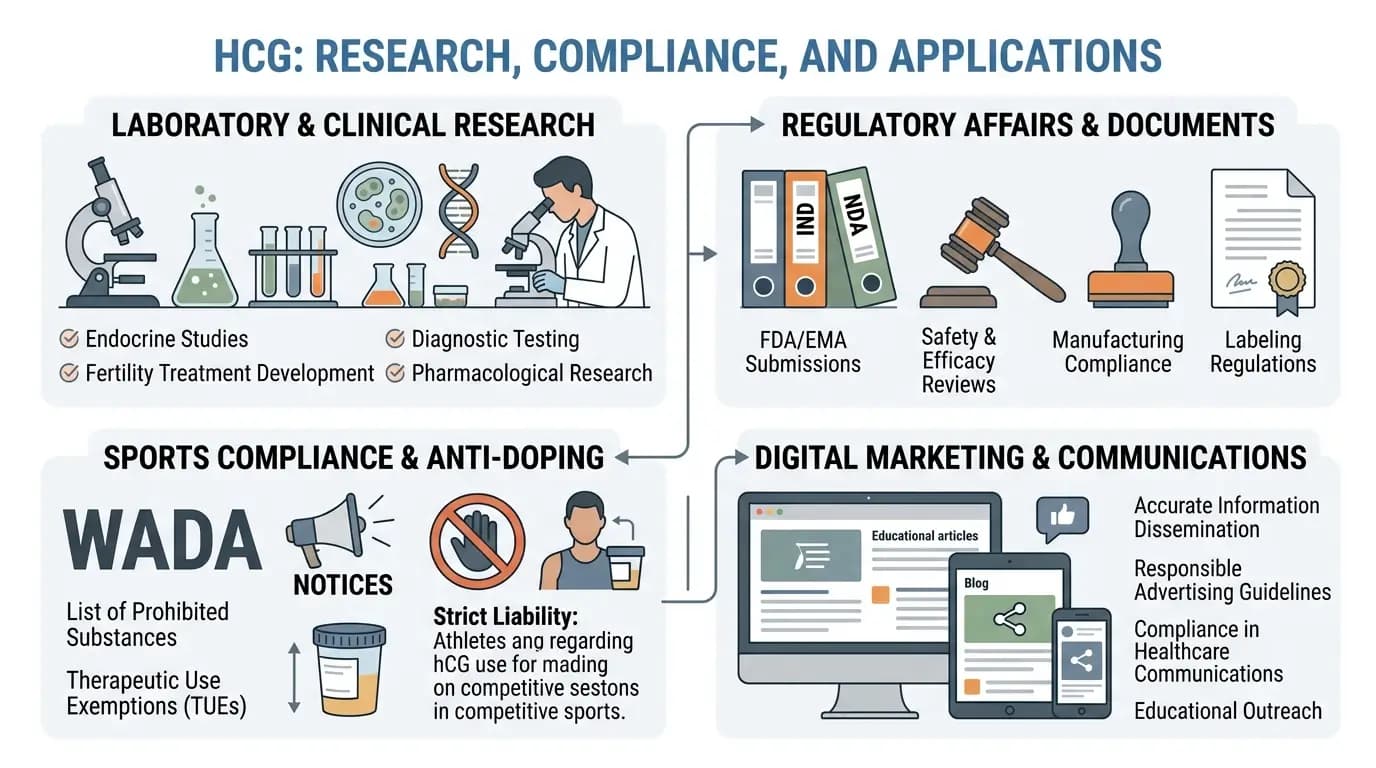
HCG peptide appears often in hormone-related online discussions because it sits at the intersection of reproduction, endocrinology, and laboratory testing. Some readers discover the term through pregnancy information. Others encounter it on sourcing pages, in fitness-adjacent forums, or in posts about hormone pathways. As a result, the phrase travels far beyond its core reproductive biology context.
WADA states that the 2026 Prohibited List includes peptide hormones, growth factors, related substances, and mimetics in a high-sensitivity category, and USADA materials explain that hCG carries restrictions in male sport settings. This does not turn the molecule into a consumer fitness product. Instead, it shows that careless marketing language around hCG can raise additional compliance concerns.
For this reason, neutral wording matters. A research-focused article about hCG should explain structure, role, testing, documentation, and literature context. It should not drift into athlete-targeted hype or forum-style promises.
The difference between supervised use and non-medical promotion
There is a major difference between HCG peptide in supervised settings and non-medical promotion. In supervised reproductive settings, the molecule appears within defined workflows. In non-medical promotion, the phrase may be attached to vague body-shaping language or unsupported claims that stretch far beyond approved use.
FDA warns consumers to avoid HCG products that carry unsupported body-weight claims and states that the agency has not approved hCG for that use. The agency also explains that severe calorie restriction, rather than hCG itself, accounts for the body-weight change seen in those plans. Therefore, HCG peptide content should never blur the line between documented hormone biology and unsupported promotion.
This distinction is especially important for research websites. A page about HCG peptide should read like a science resource, not like a personal transformation page. Consequently, neutral wording, laboratory framing, and batch documentation matter more than slogans.
Risks, adverse reactions, and major limitations
Why abnormal hCG levels need qualified interpretation
Abnormal hCG findings can point to several different possibilities, which is one reason the term is easy to misread. MedlinePlus lists ectopic pregnancy, miscarriage, trophoblastic tumor, and certain ovarian or testicular tumors among the possibilities for abnormal findings, while Cleveland Clinic notes that high hCG in a non-pregnant person can in rare cases be linked to germ cell or other cancers.
Because several different situations can influence hCG, interpretation requires expertise and context. Earlier, timing was already shown to matter. Here, the same rule still applies. A low early value, a slow rise, or an unexpectedly high reading can mean different things depending on dates, repeat results, and the rest of the laboratory picture.
Therefore, HCG peptide should be viewed as informative, but not self-explanatory. The molecule is valuable precisely because it signals useful information. However, the signal becomes meaningful only when it is matched with context and careful review.
Why self-directed use and exaggerated claims can be risky
Self-directed use creates another layer of uncertainty. FDA warns consumers to avoid unapproved HCG products marketed with unsupported claims, especially when those products are paired with severe calorie restriction. In that setting, the problem is not only the product claim, but also the unrealistic expectations built around it.
Likewise, exaggerated claims flatten a complex molecule into a simple promise. HCG peptide has a documented role in early pregnancy and a documented place in narrow supervised reproductive settings. However, that does not justify turning the topic into a catch-all answer for appearance, energy, or unsupervised hormone experimentation.
A research-first mindset helps here. Ask what HCG peptide is, how it is measured, what context the claim comes from, and whether the language matches documented use. That habit keeps the topic grounded in evidence rather than hype.
Legal, compliance, and product-positioning considerations
Supervised use versus research use versus consumer marketing
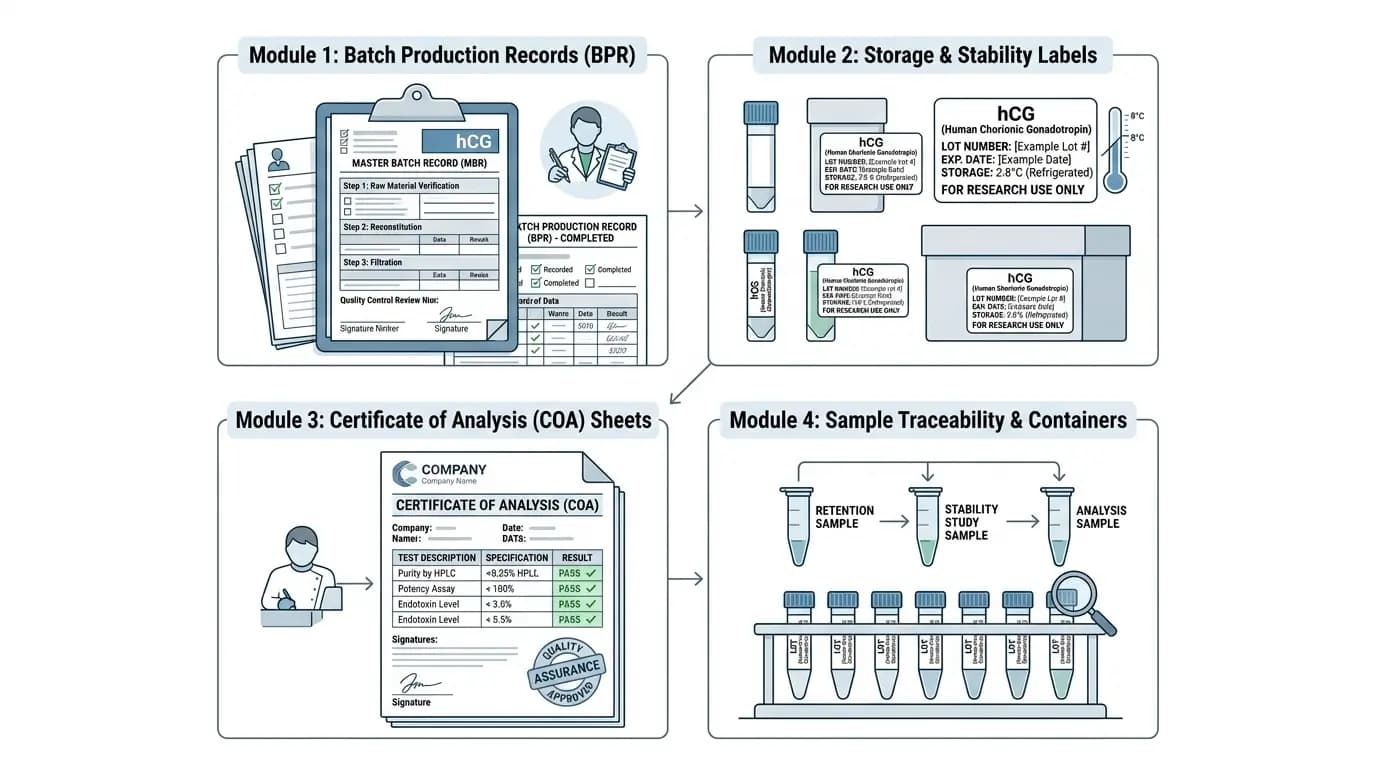
HCG peptide sits in a sensitive compliance space because its meaning changes with context. In one setting, it is a naturally produced pregnancy hormone. In another, it appears in a supervised reproductive program. In another, it may be listed as a research material with batch documentation and laboratory labeling. Each setting carries different expectations for language, oversight, and allowed claims.
For research websites, the safest positioning is narrow and factual. HCG peptide can be described through identity, structure, source documentation, analytical handling, storage, and literature context. By contrast, personal-use framing, outcome promises, or household-style suitability language can create regulatory and platform problems. FDA warning materials on HCG marketing show how quickly unsupported claims can cross that line.
A practical checklist for product positioning includes the following points:
describe hCG as a research molecule or hormone under discussion
focus on structure, testing, documentation, and literature context
avoid personal-use instructions
avoid outcome promises
avoid athlete-targeted language
keep communication neutral and verifiable
This approach helps HCG peptide content stay aligned with science communication rather than consumer hype.
Why human-use claims create additional compliance concerns
Human-use claims create extra compliance concerns because they can change the apparent intended use of a page or product. FDA has warned against HCG products marketed with unsupported body-shaping claims, and USADA education shows that hCG can also intersect with sport-rule restrictions. As a result, even casual wording around the molecule can have broader consequences than many writers expect.
For that reason, content should stay close to verifiable facts. It is reasonable to explain what hCG is, where it is measured, and why it appears in reproductive biology and research discussions. It is not reasonable to use the term as a shortcut for unsupervised outcomes or to imply that a research label cancels risky marketing language.
HCG peptide and Peptide Researches
How Peptide Researches supports research-focused sourcing, documentation, and compliance-first communication
For a research-focused company, HCG peptide should be presented with the same discipline used for any other sensitive molecule. That means clear naming, batch-level documentation, analytical records where available, storage information, and neutral educational language. A good product page should help readers understand the molecule, not persuade them with lifestyle promises.
In addition, communication should separate literature summaries from catalog information. A literature section can explain where hCG appears in reproductive biology, assay design, and hormone signaling research. A catalog section can focus on product identity, purity reporting, labeling, and handling. When those roles stay separate, the page becomes easier to trust.
Peptide Researches can support that standard by keeping HCG peptide communication compliance-first. In practice, that means research-use framing, restrained wording, and careful avoidance of claims that suggest personal use, guaranteed outcomes, or athlete targeting. Overall, a strong page should feel like a laboratory resource and an educational reference at the same time.
Conclusion
HCG peptide is easy to misunderstand because the phrase sits between peptide education, hormone biology, reproductive testing, and online marketing. In biochemical terms, hCG is more than a simple peptide. It is a glycoprotein hormone made of alpha and beta subunits, and its main recognized role is in early pregnancy, where it supports key hormonal signals and provides one of the earliest measurable markers in blood and urine.
However, the picture becomes clearer once the contexts are separated. HCG peptide in pregnancy assessment is not the same as hCG in research catalogs, and neither one should be confused with unsupported consumer promotion. In addition, sport-rule documents and FDA warnings show that careless wording around the topic can create extra compliance concerns.
Overall, the best way to understand HCG peptide is to start with structure, role, testing, and context. From there, readers can evaluate any claim by asking whether it matches reproductive biology, laboratory evidence, and neutral research communication. That approach keeps the topic grounded in facts instead of hype.