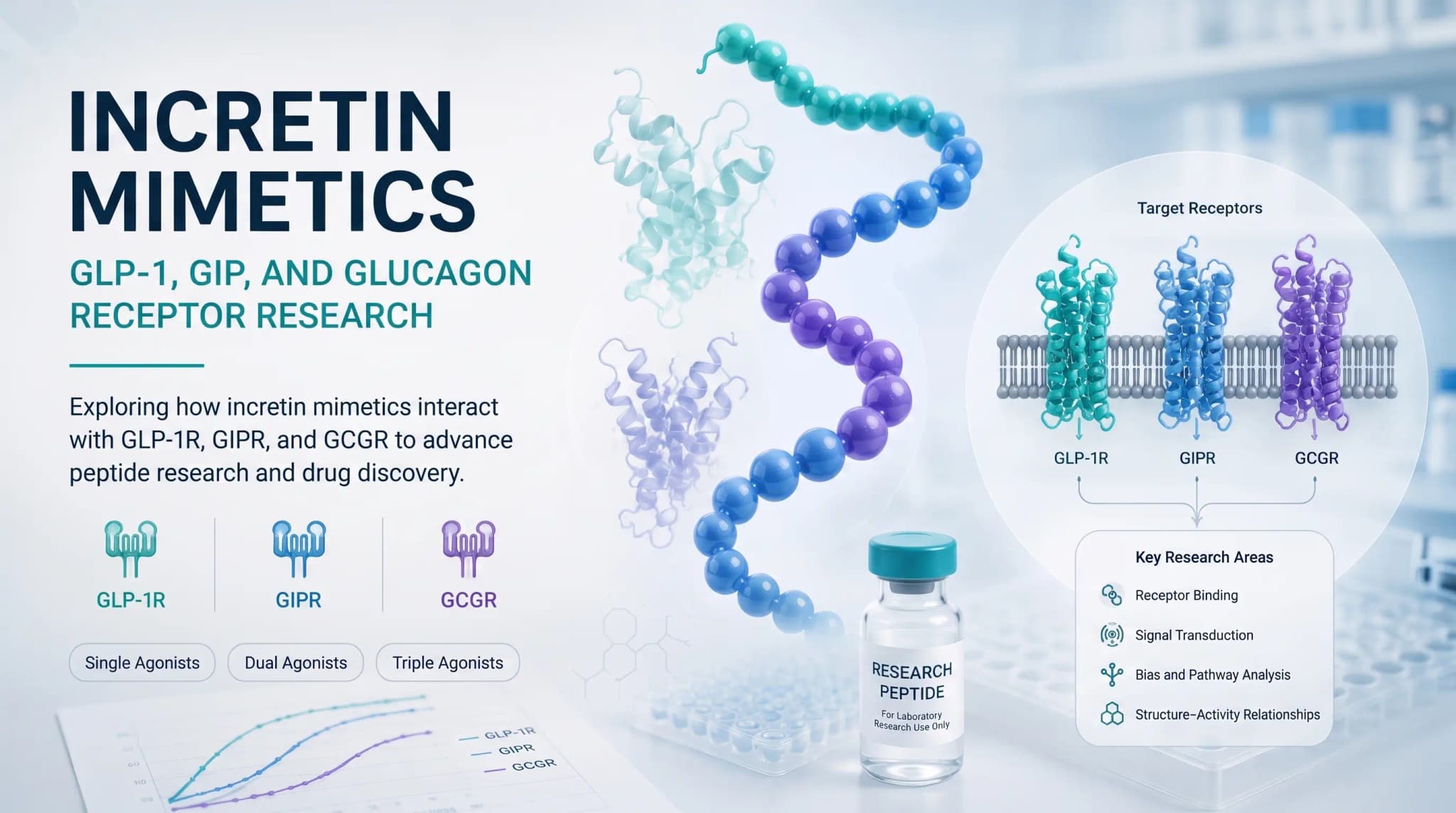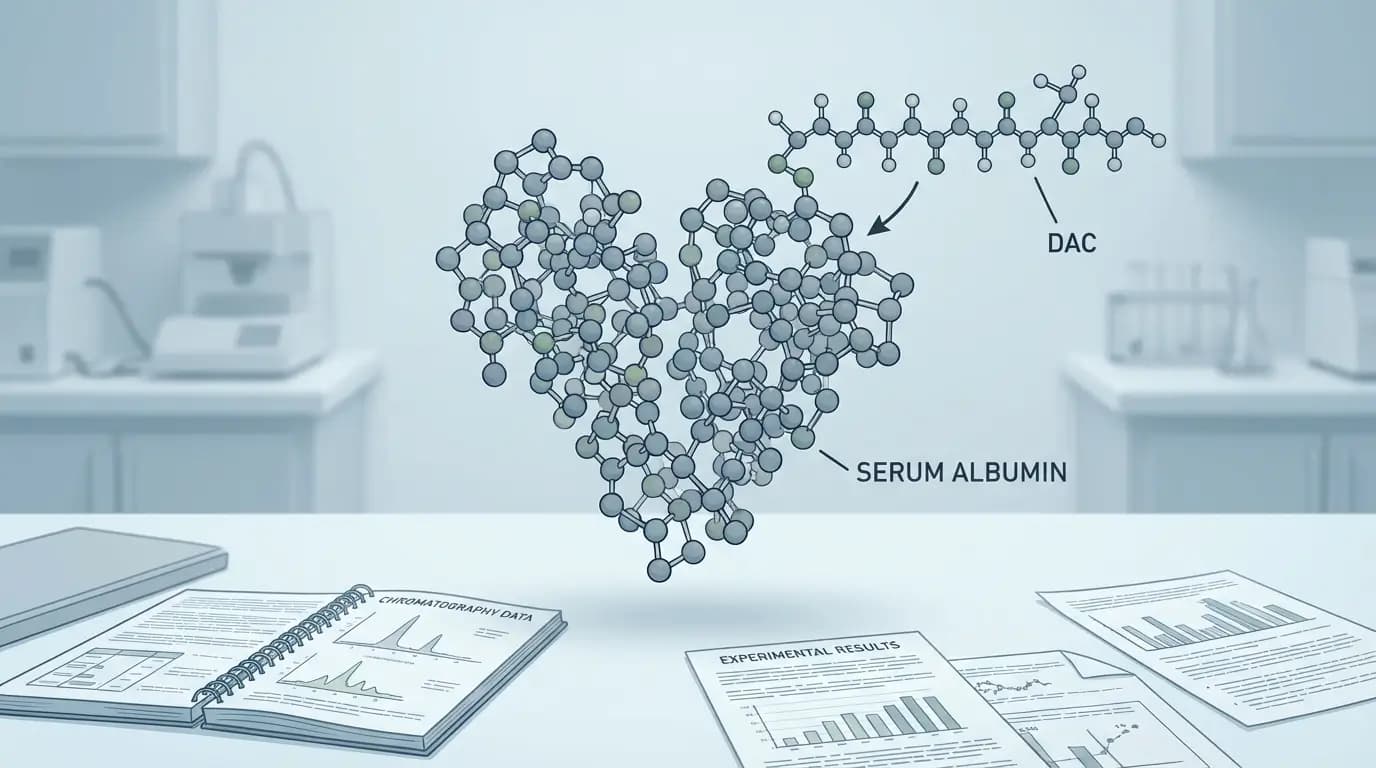
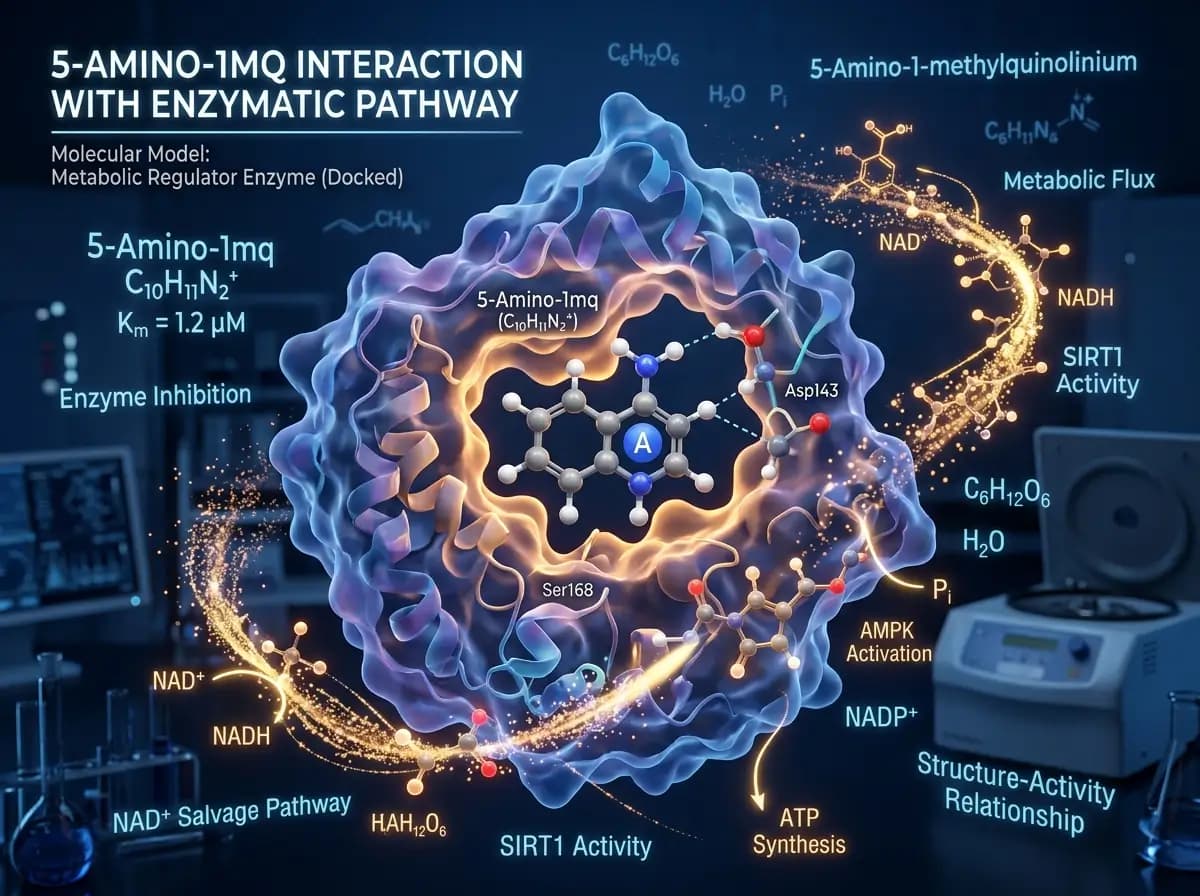
Laboratory research into enzymatic pathways often leads to the discovery of selective inhibitors like the 5 amino 1mq peptideMetabolic studies focus on this compound because it selectively targets nicotinamide N-methyltransferase (NNMT), a cytoplasmic enzyme that regulates energy homeostasis. Notably, while search queries frequently identify the compound as a peptide, scientific literature classifies it as a small molecule. This article provides a comprehensive research-focused overview of the 5 amino 1mq peptide, emphasizing its role in laboratory models rather than consumer applications.
What Is 5 Amino 1MQ Peptide?
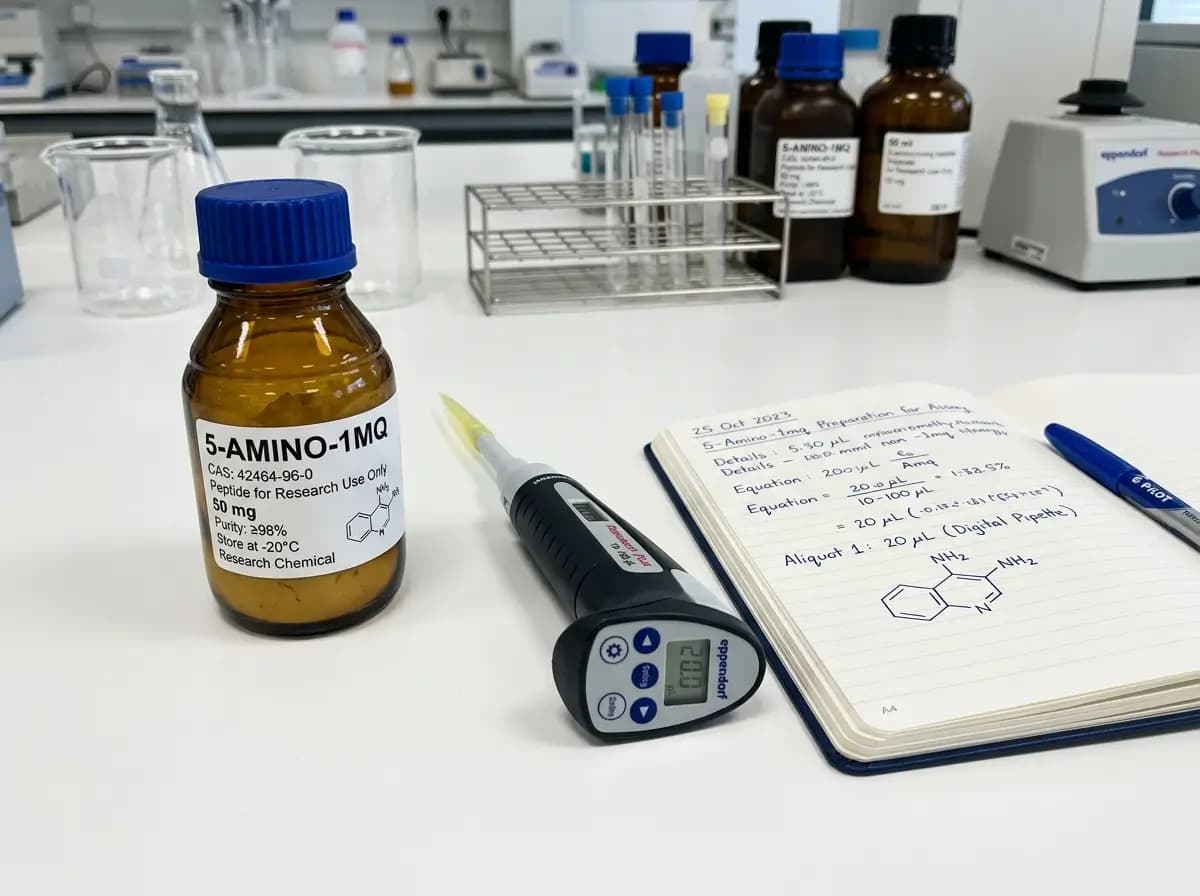
Specifically, the 5 amino 1mq peptide is a cell-permeable, selective inhibitor of the NNMT enzyme. Although the term peptide is technically a misnomer in a chemical sense, the nomenclature persists in various research communities. Consequently, researchers must distinguish between its common name and its chemical identity to ensure analytical accuracy in lab settings.
Why this keyword appears with the word peptide
Primarily, the 5 amino 1mq peptide keyword gained popularity because it is often cataloged alongside research peptides in biochemical supply chains. Furthermore, the broader category of "bioactive research compounds" frequently blends small molecules and peptides due to their shared use in preclinical signaling research. Resultantly, search engines often associate the two terms, even though the molecular structure of the compound does not contain peptide bonds.
The chemical name, 5-Amino-1-methylquinolinium
Technically, the proper IUPAC-aligned name for this compound is 5-amino-1-methylquinolinium, or 5-amino-1-methylquinoline in its free base form. Researchers synthesize this quinoline derivative to specifically compete for the active site of the NNMT enzyme. Additionally, its low molecular weight of approximately 173.21 g/mol facilitates its passage across cellular membranes. Therefore, researchers highly value it in in vitro assays requiring direct cellular entry without complex delivery vehicles.
How supplier pages and research papers describe it
In contrast to consumer-facing blogs, legitimate supplier pages describe the 5 amino 1mq peptide as a laboratory reagent. These descriptions prioritize chemical purity, molecular formula, and solubility profiles over lifestyle outcomes. Moreover, research papers typically refer to it as "NNMT inhibitor 5-amino-1MQ" to maintain scientific precision. This distinction is critical for researchers who require traceable and verifiable compounds for their experimental protocols.
The NNMT Pathway Behind 5-Amino-1MQ Research
The investigation of the 5 amino 1mq peptide centers entirely on the nicotinamide N-methyltransferase (NNMT) pathway. This enzyme is a major regulator of cellular energy expenditure and global methylation patterns. Specifically, NNMT sits at a metabolic bottleneck that dictates how a cell utilizes its available energy precursors.
What NNMT is
Nicotinamide N-methyltransferase (NNMT) is a metabolic enzyme primarily expressed in the liver and adipose tissue. Historically, its main role was thought to be the clearance of excess nicotinamide. However, modern research identifies NNMT as a master regulator of the metabolic "tug-of-war" between energy storage and energy utilization. Furthermore, researchers have observed elevated levels of NNMT in various animal models characterized by reduced metabolic efficiency.
The link between nicotinamide, 1-MNA, SAM, and NAD+
Specifically, NNMT catalyzes the methylation of nicotinamide (NAM) using S-adenosyl-L-methionine (SAM) as the methyl donor. This reaction produces 1-methylnicotinamide (1-MNA). Consequently, high NNMT activity depletes the pool of nicotinamide available for the NAD+ salvage pathway. By utilizing the 5 amino 1mq peptide, researchers can effectively block this depletion. Resultantly, cells recycle more available nicotinamide into NAD+, which is essential for mitochondrial function and cellular health.
Why researchers study NNMT in metabolic regulation
Notably, the interplay between NNMT and NAD+ makes this pathway a primary target for metabolic regulation research. Because NAD+ is a co-factor for sirtuins and other energy-sensing molecules, its availability dictates the metabolic rate of the cell. Therefore, the 5-amino-1mq peptide serves as a tool to investigate whether inhibiting NNMT can "unlock" higher energy expenditure in laboratory models. Additionally, this research examines how shifts in the SAM/SAH ratio influence the epigenetic signaling that governs cell identity.
How 5-Amino-1MQ Is Investigated in Research
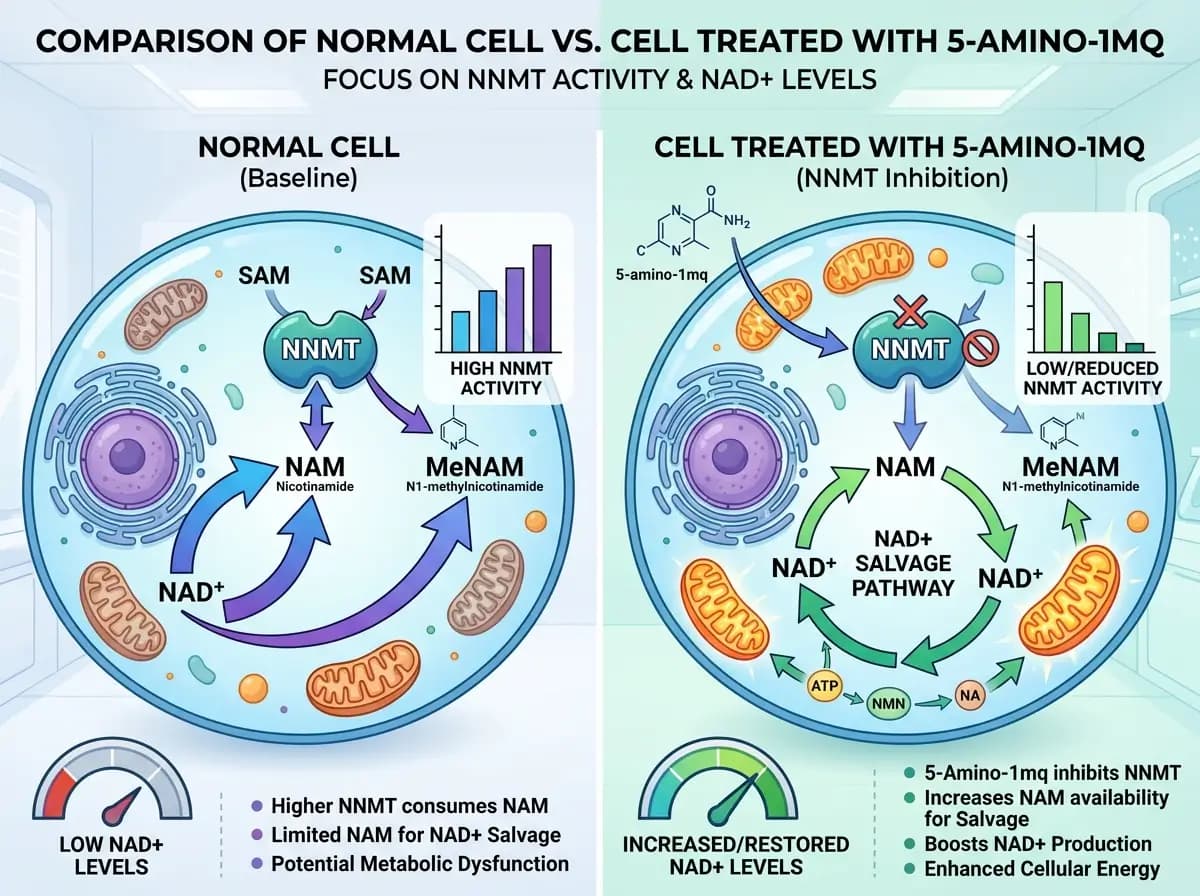
The 5 amino 1mq peptide is currently explored through a variety of preclinical methodologies. These studies aim to clarify the compound's potency and its systemic influence on biological models. Importantly, all such investigations are conducted in strictly controlled environments.
Enzyme inhibition assays
Primarily, researchers use purified NNMT enzymes to determine the IC50 (half-maximal inhibitory concentration) of the 5 amino 1mq peptide. These biochemical assays confirm that the compound is a competitive inhibitor that does not significantly affect other methyltransferases. Furthermore, this specificity is essential for ensuring that the experimental results are attributable solely to NNMT suppression. Consequently, these assays form the foundation of the compound's analytical profile.
Cell-based adipocyte work
In addition to enzyme assays, cell-based research often utilizes adipocyte (fat cell) models. Specifically, researchers apply the 5 amino 1mq peptide to cultured cells to observe changes in lipid accumulation. Historically, these studies have noted a decrease in lipid droplet size and an increase in glucose transporter expression. Similarly, these in vitro results help scientists understand the molecular mechanisms that might later be observed in more complex biological systems.
Animal-model studies and what they can show
Moreover, animal-model research provides data on the systemic effects of NNMT inhibition. In these studies, the 5-amino-1mq peptide is typically administered to murine models on specific laboratory diets. Researchers monitor shifts in adipose tissue mass and overall oxygen consumption. Notably, these studies often report a reduction in white adipose tissue without a corresponding change in the subjects' food intake. Resultantly, this suggests a purely metabolic shift driven by enzymatic modulation.
Why model limits matter
However, it is vital to acknowledge that findings in murine or cellular models do not translate directly to other species. Specifically, the regulatory landscape for the 5 amino 1mq peptide is restricted because human established data does not exist. Furthermore, researchers must account for potential compensatory pathways that might arise in a whole-organism setting. Therefore, current literature remains preliminary and is intended only to guide further scientific inquiry.
Chemical Identity and Lab Profile
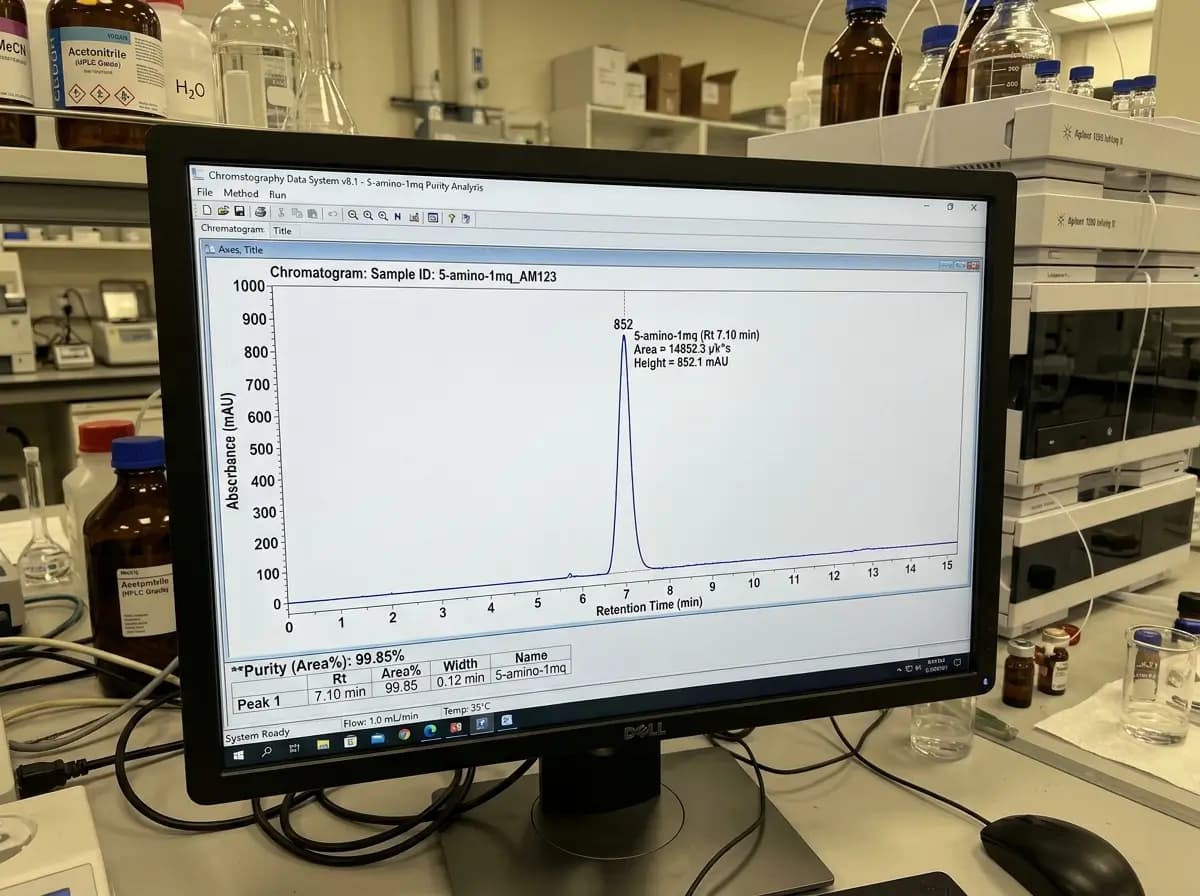
Maintaining the integrity of the 5 amino 1mq peptide requires a detailed understanding of its chemical profile. In a laboratory context, this compound is treated as a high-precision reagent.
Molecular identity, naming, and catalog references
The molecular formula for the 5 amino 1mq peptide is $C_{10}H_{11}N_2^+$, often provided as a salt such as trifluoroacetate or iodide. In technical catalogs, it may be listed under its CAS number or as a specific NNMT inhibitor (NNMTi). Additionally, the naming must be consistent across all lab documentation to ensure the traceability of the research material.
Purity, COA, HPLC, and MS documentation
Specifically, researchers require a Certificate of Analysis (COA) for every batch of 5 amino 1mq peptide. This documentation includes High-Performance Liquid Chromatography (HPLC) and Mass Spectrometry (MS) results. Furthermore, these reports verify the compound’s purity, which should ideally exceed 98%. Consequently, any presence of impurities could confound the results of a metabolic study, making traceability a non-negotiable standard for laboratory work.
Storage, handling, and stability notes in a lab setting
Technically, the 5 amino 1mq peptide is provided as a lyophilized powder that is stable at room temperature for shipping. However, long-term storage should occur at -20°C or -80°C in a desiccated environment to prevent degradation. Additionally, once reconstituted in a solvent like DMSO, the solution should be used immediately or aliquoted and frozen. Resultantly, adhering to these storage protocols preserves the potency of the inhibitor for subsequent assays.
What the Literature Reports About 5-Amino-1MQ
The body of peer-reviewed literature concerning the 5-amino-1mq peptide has expanded significantly in recent years. These papers provide the empirical basis for its use in modern metabolic research.
The 2018 paper on selective NNMT inhibitors in mouse models
Specifically, a landmark 2018 study (Neelakantan et al.) investigated the use of the 5 amino 1mq peptide in diet-induced murine models. The researchers found that NNMT inhibition was associated with a decrease in adipose tissue mass and an improvement in metabolic markers. Furthermore, this study was one of the first to demonstrate that a small molecule could selectively target the NNMT enzyme in vivo. Consequently, this paper is frequently cited as the primary justification for continued NNMT inhibitor research.
The 2024 aged-mouse paper on muscle-function research
Moreover, a more recent 2024 study examined the 5 amino 1mq peptide in the context of cellular signaling in muscle tissue within aged-mouse models. This research explored how the compound influenced myocellular homeostasis and signaling pathways associated with energy utilization. Notably, the study focused on the intracellular mechanisms of muscle fiber maintenance rather than systemic growth. Similarly, these findings contribute to a broader understanding of how the NNMT-NAD+ axis affects tissue-specific aging processes.
What these papers do not establish for humans
In contrast to promotional claims, these papers do not establish the safety or efficacy of the 5 amino 1mq peptide for human use. Primarily, these studies are proof-of-concept investigations meant to define the compound's biochemical potential. Additionally, the concentrations used in these models are specific to the experimental design and cannot be extrapolated to other contexts. Therefore, the compound remains strictly for laboratory research only.
How to Read 5-Amino-1MQ Pages Critically
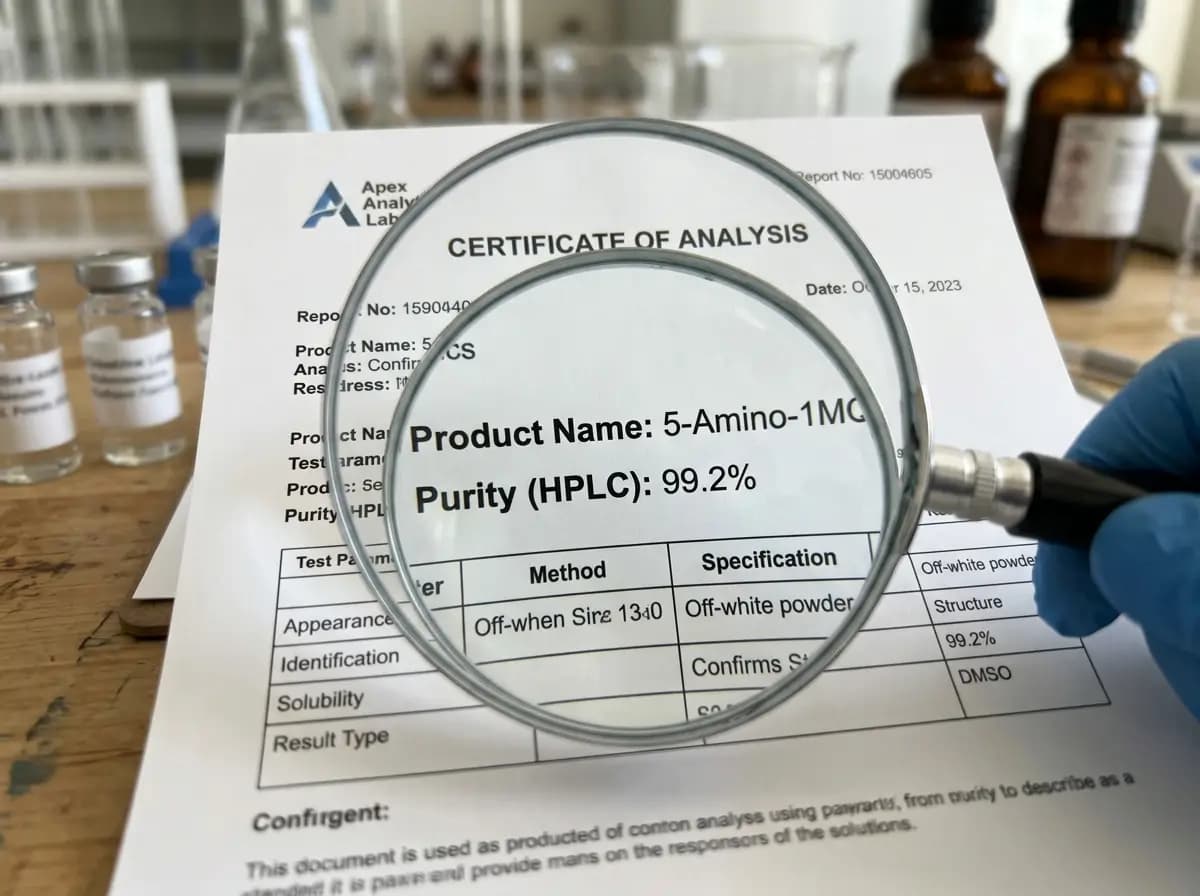
Because the 5 amino 1mq peptide is a high-interest keyword, researchers must navigate through a significant amount of promotional noise. Reading these pages critically is essential for sourcing high-quality reagents.
Research language versus hype language
Notably, a reliable source for the 5 amino 1mq peptide will use analytical and neutral language. Specifically, they will discuss "enzymatic inhibition," "metabolic signaling," and "preclinical models". Conversely, pages that use hype language such as "fast weight loss" or "muscle growth benefits" should be viewed with skepticism. Furthermore, any site that implies human outcomes or provides personal protocols is in violation of standard laboratory compliance rules.
Which page elements support trust, identity, and traceability
Specifically, a trustworthy page for the 5 amino 1mq peptide should include accessible COAs and detailed chemical specifications. Additionally, they should provide clear information regarding the compound's stability and recommended storage conditions. Moreover, the presence of peer-reviewed citations and a clear research-use disclaimer supports the legitimacy of the source. Consequently, these elements ensure that the researcher is acquiring a compound that meets the necessary analytical standards.
Common SERP weaknesses you can beat with a cleaner structure
Historically, search results for the 5 amino 1mq peptide have been cluttered with non-scientific blog posts. Many of these pages lack a clear hierarchy and fail to define the compound's true enzymatic target. By providing a structure that prioritizes the NNMT mechanism and chemical identity, a page can offer superior value to the research community. Resultantly, a cleaner, research-focused structure satisfies both search engine algorithms and the needs of professional researchers.
What a Strong Research-Only 5-Amino-1MQ Article Should Include
To maintain the highest standards of scientific communication, an article on the 5 amino 1mq peptide must follow a specific structural template. This ensures that the content remains educational and compliant.
A simple chemical overview for beginners
Specifically, the article should open with a clear definition of what the 5 amino 1mq peptide is and what it is not. This section should clarify its classification as a small molecule NNMT inhibitor and its molecular formula. Furthermore, this provides the necessary context for readers who may be new to metabolic research.
A mechanism section built around NNMT
Additionally, the core of the article must explain the NNMT-NAD+ pathway in detail. This section should describe how the 5 amino 1mq peptide blocks the depletion of nicotinamide and the subsequent impact on cellular energy. By focusing on the mechanism, the article remains grounded in biochemistry rather than lifestyle claims.
A literature summary with model names and limits
Moreover, any discussion of research findings must clearly identify the models used, such as in vitro adipocyte cultures or in vivo murine models. Specifically, the article should highlight the limitations of these studies and avoid making any cross-species generalizations. Consequently, this maintains the factual accuracy required for scientific content.
A technical specs block
Resultantly, the article should include a mini-table or list summarizing the compound's physical and chemical properties. This block serves as a quick-reference guide for researchers who need to know the molecular weight, solubility, and purity standards of the 5 amino 1mq peptide.
A documentation and storage section
Specifically, the article must emphasize the importance of COAs and proper storage protocols. This information is vital for maintaining the stability and reproducibility of experimental results. Additionally, it reinforces the compound's status as a professional laboratory reagent.
A clear research-use disclaimer section
Finally, a strong article must include a prominent disclaimer stating that the 5-amino-1mq peptide is for laboratory research use only. This section should explicitly state that the compound is not for human consumption, diagnosis, or treatment. Furthermore, this ensures that the page remains compliant with regulatory and editorial guidelines.
Key Terms to Explain Inside the Article
To improve the clarity and accessibility of the research, several key entities related to the 5 amino 1mq peptide should be defined.
NNMT: Nicotinamide N-methyltransferase, the primary enzymatic target of the inhibitor.
Nicotinamide: A form of Vitamin B3 and a crucial precursor in the NAD+ salvage pathway.
1-Methylnicotinamide (1-MNA): The metabolic byproduct created when NNMT methylates nicotinamide.
NAD+: Nicotinamide adenine dinucleotide, a central co-enzyme for cellular respiration and energy production.
Adipocyte model: A laboratory cell culture of fat cells used to study lipid metabolism in vitro.
Preclinical research: Scientific studies conducted in laboratory settings (cell or animal models) before any potential consideration of human application.
Research Entity | Role in 5-Amino-1MQ Studies |
NNMT Enzyme | Primary molecular target for inhibition |
Methylation | The process blocked by 5-amino-1MQ |
Mitochondria | The organelle that responds to increased NAD+ |
Preclinical Model | The exclusive environment for current 1MQ data |
Conclusion
In conclusion, the 5 amino 1mq peptide is a specialized chemical tool utilized to investigate the complex pathways of metabolic regulation. Specifically, its role as a selective NNMT inhibitor allows researchers to explore the dynamics of NAD+ preservation and global methylation in laboratory settings. Furthermore, while the compound is often colloquially referred to as a peptide, its chemical identity as a small molecule quinoline derivative is essential for scientific precision. Additionally, the current literature, including the 2018 and 2024 murine studies, provides a foundational understanding of the compound's biochemical potential within preclinical models. Ultimately, by maintaining a research-first tone and emphasizing chemical traceability, scientists can continue to utilize the 5 amino 1mq peptide to unlock new insights into cellular energy management without the distractions of non-scientific hype.