What Are Peptides? A Comprehensive Overview

Peptides are short chains of amino acids linked in a defined sequence. When people ask what are peptides, they are usually looking for a clear biochemical explanation rather than a marketing claim. In research settings, peptides are studied as molecular tools, signaling agents, structural motifs, and model compounds that help scientists examine how biological systems work.
Definition of peptides
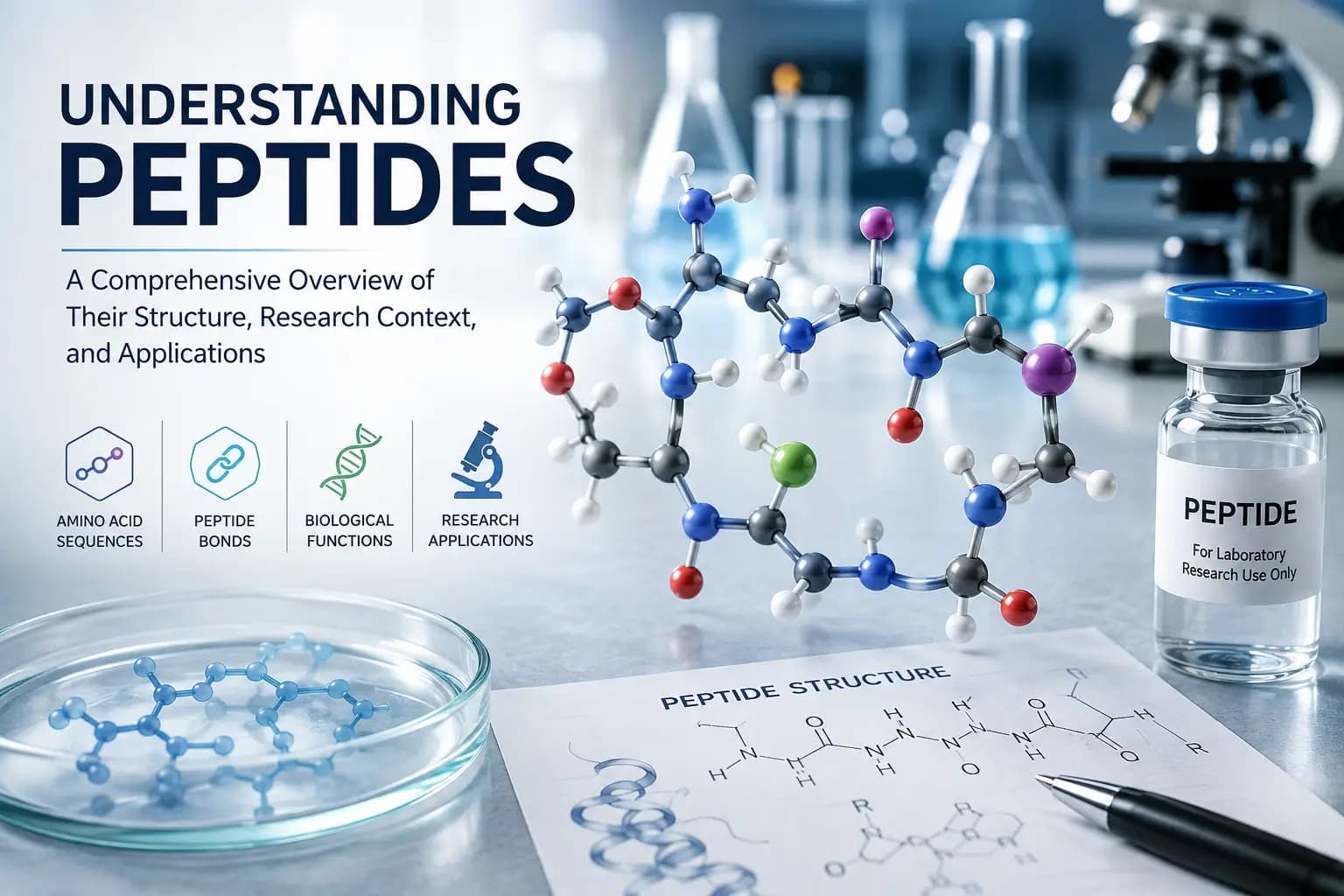
A useful peptides definition is simple: peptides are molecules made of two or more amino acids joined by peptide bonds. In other words, the peptides meaning centers on chain length and composition. Most scientific descriptions place peptides between individual amino acids and larger proteins, although the exact cutoff can vary by source.
Peptides occur naturally in living organisms and can also be produced synthetically in laboratories. Accordingly, researchers may study endogenous peptides, which are generated by cells and tissues, or synthetic peptides, which are assembled for controlled experiments. This distinction is important because a peptide’s origin can affect purity targets, analytical methods, and experimental design.
Chemical structure and amino acid composition
The basic peptide structure begins with amino acids, each containing an amino group, a carboxyl group, and a side chain. During peptide formation, the carboxyl group of one amino acid reacts with the amino group of another, creating a peptide linkage. Consequently, the resulting chain has directionality, commonly described from the N-terminus to the C-terminus.
A peptide’s behavior depends on several structural features:
Amino acid sequence
Chain length
Net charge
Hydrophobicity
Secondary folding tendencies
Presence of modifications such as acetylation or amidation
Even short sequences can show highly specific binding or signaling properties. For instance, a small change in residue order may alter receptor interaction, solubility, or stability in a laboratory model.
Distinctions between peptides and proteins
One of the most common questions behind what are peptides is how they differ from proteins. Generally, peptides are shorter than proteins and often have simpler higher-order structures. However, the boundary is not absolute, because some longer peptides can adopt complex conformations while some small proteins remain relatively compact.
The table below summarizes common distinctions:
Feature | Peptides | Proteins |
|---|---|---|
Typical length | Short amino acid chains | Longer amino acid chains |
Structural complexity | Often lower, though variable | Usually higher with folded domains |
Research use | Signaling studies, standards, probes | Enzymes, receptors, structural components |
Synthesis approach | Commonly chemical synthesis | Often biosynthesis or recombinant production |
Classification of peptides (e.g., signaling peptides, transport peptides)
Researchers classify peptides in several ways, including function, origin, and chemical design. Moreover, this classification helps organize the many types of peptides found in biology and laboratory work.
Common categories include:
Signaling peptides, studied for cell communication pathways
Transport peptides, investigated for membrane crossing or cargo delivery
Structural peptides, used to explore assembly and biomaterials
Enzyme substrate peptides, designed for assay development
Bioactive peptides, examined for measurable biological interactions
Synthetic peptides, created to model natural sequences or test hypotheses
Because peptides in biology span many systems, no single category captures them all. Nevertheless, this framework gives beginners a practical starting point for understanding peptides examples and why they matter in research.
Peptide Structure and Function
Peptide science depends on understanding how sequence, bonding, and physicochemical properties influence function. When researchers examine what are peptides at a deeper level, they move beyond a simple definition and focus on how structure determines interaction. Thus, peptide chemistry and peptide biology are closely linked.
Chemical bonds and peptide linkages
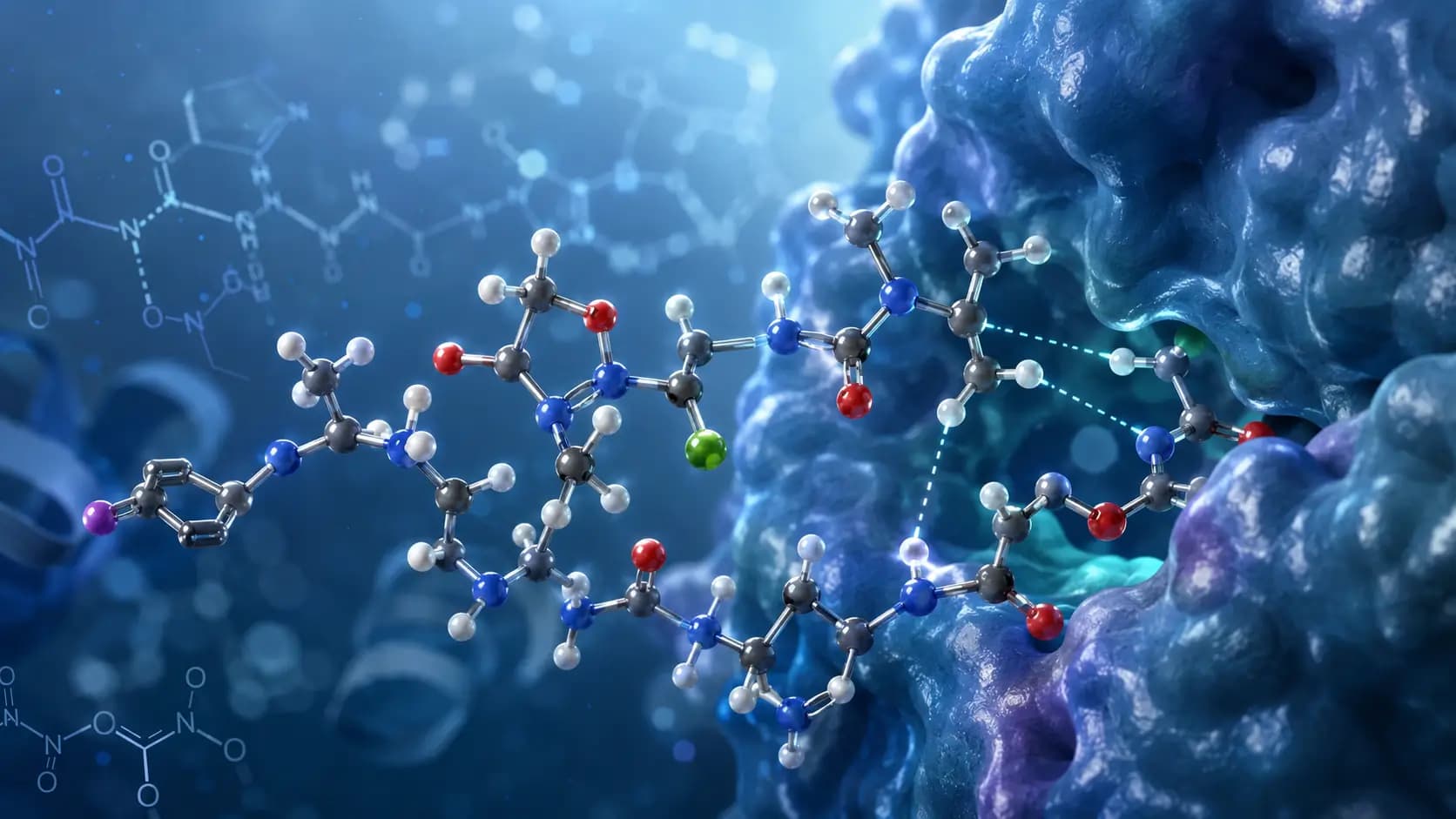
The defining bond in a peptide is the amide bond, commonly called the peptide bond. It forms through a condensation reaction between amino acids, producing a backbone with repeating nitrogen-carbon-carbon units. Because this bond has partial double-bond character, rotation is restricted, and that constraint influences overall conformation.
Peptide structure is not determined by sequence alone. Additionally, hydrogen bonding, ionic interactions, hydrophobic contacts, and disulfide bridges can shape the three-dimensional arrangement. These features may affect receptor recognition, enzyme cleavage, and aggregation behavior in vitro.
A few structural elements commonly evaluated in peptide research include:
Primary structure, meaning the amino acid sequence
Secondary tendencies, such as helices or turns
Terminal modifications
Cyclization state
Presence of non-natural residues
For example, cyclic peptides often show different stability and binding profiles than linear peptides. Similarly, substitution with D-amino acids can alter degradation patterns in analytical experiments.
Molecular weight and purity specifications
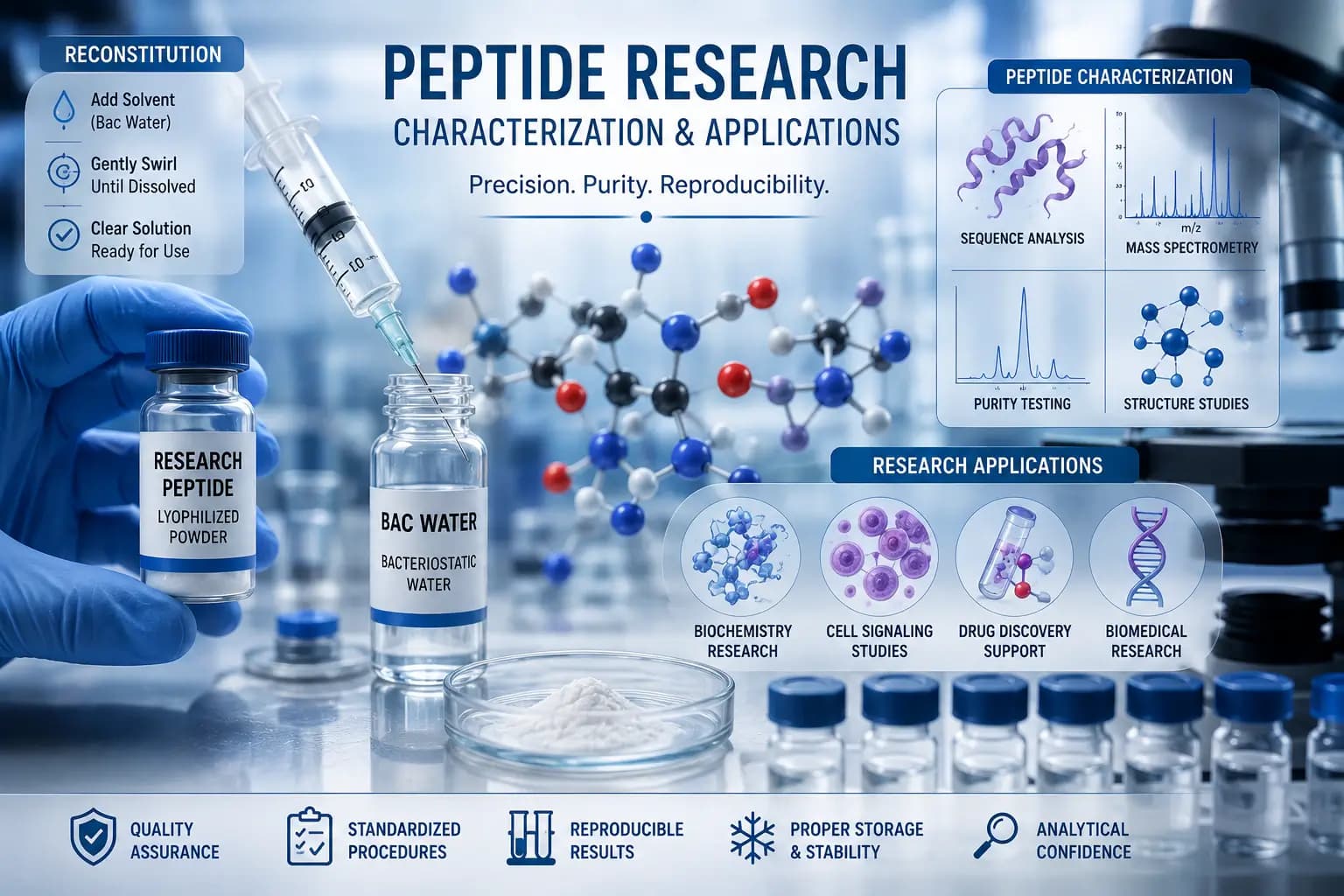
In laboratory settings, peptide characterization typically includes molecular weight confirmation and purity assessment. Researchers often verify identity using mass spectrometry, while purity is commonly measured by high-performance liquid chromatography. Accordingly, these specifications help determine whether a material is appropriate for assay development, binding studies, or mechanistic screening.
The table below shows common analytical parameters:
Parameter | Why it matters in research |
|---|---|
Molecular weight | Confirms expected composition |
Purity percentage | Estimates proportion of target peptide |
Sequence confirmation | Verifies residue order |
Solubility profile | Guides buffer selection in experiments |
Counterion content | Affects mass balance and formulation notes |
Storage stability | Informs shelf-life under lab conditions |
Purity specifications are especially important for synthetic peptides. However, a high purity value does not automatically answer every experimental question, because trace impurities, oxidation products, or truncated sequences may still influence sensitive assays. Therefore, researchers often review chromatograms, spectra, and certificates of analysis together rather than relying on one number alone.
Role of peptides in biological systems
Peptides in biology serve many functions across organisms. Some act as signaling molecules, while others participate in immune recognition, developmental regulation, or intercellular communication. Because they can be highly specific, peptides are often used by nature as compact information carriers.
The peptides function observed in biological systems depends on context. For instance, a peptide may bind a receptor, modulate an enzyme, influence transport, or serve as a precursor to a larger active product. Furthermore, some peptides are generated by proteolytic cleavage of larger proteins, showing that protein processing is an important source of biologically relevant sequences.
Common biological roles include:
Cell signaling
Hormonal regulation
Neurochemical communication
Antimicrobial defense
Enzyme modulation
Molecular recognition
These roles help explain why the question what are peptides appears so often in biology education. Peptides meaning, in practice, is tied to their ability to connect chemical structure with measurable biological activity.
Examples of peptide functions in scientific research
Peptides examples in research are diverse and often highly technical. Scientists use short peptide fragments to map receptor binding regions, identify enzyme cleavage preferences, and model protein interaction surfaces. Likewise, peptide libraries can be screened to compare how sequence changes alter affinity or selectivity.
A few common research uses include:
Fluorescent peptide probes for localization studies
Substrate peptides for kinase or protease assays
Epitope peptides for antibody characterization
Cell-penetrating peptides as delivery models
Self-assembling peptides for biomaterials research
These applications illustrate why types of peptides are often discussed by function rather than by size alone. In fact, the same peptide class may be relevant to analytical chemistry, structural biology, and cell-based experiments at the same time.
When beginners ask what are peptides, they often expect a narrow answer. Instead, the fuller picture is that peptides are versatile molecular systems whose properties can be tuned through sequence design, chemical modification, and experimental context.
Research Applications of Peptides

Peptides are widely used in laboratory science because they are modular, measurable, and adaptable to many experimental systems. Understanding what are peptides in this context means seeing them as research tools rather than consumer products. Therefore, their value often lies in how precisely they can be designed and analyzed.
Overview of peptide applications in laboratory research
Synthetic peptides are common in biochemical and cell-based studies. Researchers order defined sequences to test binding interactions, mimic protein regions, or create assay standards. Because synthesis is programmable, peptides can be tailored to include labels, linkers, protective groups, or sequence variants.
Common laboratory applications include:
Receptor binding studies
Enzyme substrate analysis
Protein interaction mapping
Antibody epitope research
Analytical method calibration
Biomaterials and self-assembly experiments
Peptides are also useful because they can simplify complex biological questions. For example, instead of studying a full-length protein, a scientist may isolate one relevant region as a peptide model. Consequently, experiments can become easier to interpret, especially during early-stage mechanism work.
Current areas of investigation (e.g., disease models, cell signaling)
Current peptide research spans many fields, but the framing must remain scientific and model-based. In vitro systems and animal model research examine how peptides participate in signaling pathways, membrane interactions, host defense processes, and molecular recognition events. One focused example is incretin mimetics and receptor research, where peptide-based agonists are studied across GLP-1R, GIPR, and GCGR signaling systems. However, findings from these models are preliminary and do not establish outcomes in humans.
Areas frequently investigated include:
Research area | Typical question under study |
|---|---|
Cell signaling | How does a sequence affect receptor or pathway activation? |
Structural biology | What conformations form under defined conditions? |
Immunology models | How do peptide fragments interact with immune components? |
Neuroscience models | How do short sequences influence communication pathways in model systems? |
Biomaterials | Can peptides assemble into predictable nanostructures? |
Analytical chemistry | How can peptide standards improve assay validation? |
Bioactive peptides are especially important in these fields. In particular, researchers investigate naturally derived sequences from food proteins, microbial systems, and endogenous precursors to understand how sequence motifs relate to measurable activity in controlled models.
Exploration of mechanisms under study
Mechanistic peptide research focuses on how a sequence produces an observable effect at the molecular level. This often includes receptor engagement, enzyme interaction, membrane association, conformational switching, or downstream signaling changes. Moreover, mechanism studies help distinguish direct effects from artifacts caused by concentration, solvent, or assay design.
Several mechanistic themes appear repeatedly in peptide literature:
Sequence-specific binding to proteins or receptors
Competitive inhibition at defined binding sites
Membrane disruption or membrane translocation
Self-assembly into fibrils, gels, or nanostructures
Proteolytic processing and fragment generation
For instance, a transport peptide may be investigated for how charge distribution influences cellular entry in vitro. Similarly, an enzyme substrate peptide may be modified residue by residue to identify which positions are required for recognition. These approaches are central to peptides function research because they connect chemistry with biological readouts.
Researchers also use peptide libraries to study mechanism at scale. Accordingly, dozens or hundreds of related sequences can be screened under standardized conditions. This allows scientists to compare trends such as:
Longer versus shorter chain behavior
Linear versus cyclic peptide performance
Natural versus non-natural amino acid substitutions
Terminally modified versus unmodified sequences
When asking what are peptides from a research perspective, this mechanistic dimension matters. Peptides are not only short amino acid chains, they are also controllable experimental platforms for testing molecular hypotheses.
Another important application involves peptide conjugates. These are peptides linked to fluorophores, polymers, lipids, or other molecular tags. Besides improving detection, conjugation can help researchers track localization, binding, or degradation in model systems.
Finally, peptides examples in modern laboratories often overlap across disciplines. A single synthetic peptide may serve as a mass spectrometry standard, a structural probe, and a cell assay reagent in separate workflows. Hence, the broad usefulness of peptides comes from their combination of chemical precision and biological relevance.
Safety and Compliance Considerations

Peptide research requires careful attention to technical handling, documentation, and regulatory context. When discussing what are peptides in a compliant way, it is essential to keep the focus on laboratory use only. Accordingly, this section addresses research material considerations rather than personal use.
Safety profile of research peptides
The safety profile of a research peptide cannot be generalized across all sequences. Different peptides vary in length, charge, purity, solubility, and biological activity, and each factor may influence laboratory risk assessment. Therefore, materials should be handled according to institutional procedures, supplier documentation, and chemical hygiene practices.
Important points for laboratory review include:
Sequence identity and known hazards
Purity and impurity profile
Solvent compatibility
Potential aerosol or powder exposure
Stability during storage and handling
Waste disposal requirements
Although peptides are often discussed as familiar biomolecules, that does not remove the need for caution. In fact, even small quantities of a potent sequence, contaminant, or degradation product can interfere with experiments or create avoidable exposure concerns in the lab.
Regulatory status overview (FDA and WADA compliance)
Regulatory context depends on intended use, labeling, and distribution framework. For laboratory suppliers, the most important principle is that research peptides must be presented for scientific and analytical purposes only. Moreover, content should not imply diagnosis, prevention, mitigation, or treatment of any condition, and it should not provide human-use instructions.
A compliance-oriented summary is helpful:
Topic | General compliance principle |
|---|---|
Labeling | State laboratory research use only |
Marketing language | Avoid human outcome claims |
Usage guidance | Avoid administration or protocol instructions |
Documentation | Maintain technical records such as COA where applicable |
Regulatory framing | Keep educational, non-promotional, and non-medical |
Competitive sport organizations may restrict certain substances. Users are responsible for checking applicable rules. This is especially relevant because peptide-related categories appear in anti-doping frameworks, including high-sensitivity areas associated with peptide hormones, growth factors, related substances, and mimetics.
Proper handling and storage of peptides
Proper handling supports material integrity and experimental reproducibility. Peptides may be sensitive to moisture, repeated temperature changes, oxidation, or light exposure, depending on sequence and formulation. Consequently, storage recommendations should be reviewed on a product-specific basis.
General laboratory practices often include:
Store according to supplier temperature guidance
Minimize repeated freeze-thaw exposure where relevant
Use clean, low-binding labware when appropriate
Document lot number, opening date, and storage history
Protect light-sensitive materials during handling
Review analytical data before critical experiments
For dry powders, low humidity and sealed containment are commonly important. For solutions, buffer composition, pH, and storage duration can affect aggregation or degradation. Furthermore, some peptides dissolve readily in aqueous systems, while others require careful solvent screening for research preparation.
Researchers should also keep handling language technical and neutral. Instead of discussing consumer-style use, documentation should focus on identity testing, reanalysis schedules, aliquoting strategy, contamination control, and disposal procedures. This keeps the discussion aligned with scientific catalog standards and reduces ambiguity about intended use.
In summary, what are peptides from a compliance standpoint depends not only on chemistry but also on context. The same molecule can be interpreted very differently depending on how it is described, labeled, and handled. Thus, accurate technical communication is a core part of peptide research practice.
Literature Summaries and Key Findings

Peer-reviewed literature on peptides is broad and multidisciplinary. To answer what are peptides in an evidence-based way, it helps to review how researchers study them across chemistry, structural biology, and preclinical models. However, literature summaries must remain careful about model limits and should not be interpreted as statements about human outcomes.
Summary of significant peer-reviewed studies
A substantial body of research examines peptide design, delivery, stability, and target interaction. Review articles in the biomedical literature have described peptides as valuable molecules for probing receptors, transporting cargo, and modeling functional regions of larger proteins. Additionally, studies on cell-penetrating peptides have explored how short cationic or amphipathic sequences move across membranes under controlled conditions.
Other significant lines of work include:
Structure-activity relationship studies comparing sequence variants
Cyclic peptide studies evaluating conformational constraint
Peptide library screening for binding motif discovery
Self-assembling peptide research in materials science
Protease substrate mapping with fluorescent peptide constructs
In many of these studies, the major finding is not a broad biological claim but a mechanistic insight. For instance, investigators may report that a specific residue pattern changes binding affinity in vitro, or that cyclization alters resistance to enzymatic breakdown in a model system. Consequently, the literature often advances understanding step by step rather than through sweeping conclusions.
Discussion on research models and limitations
Model choice strongly affects interpretation. In vitro assays can isolate a receptor, enzyme, or membrane process with high control, but they may not represent the complexity of a living organism. Likewise, animal model research can reveal distribution, metabolism, or systems-level effects, yet species differences may limit transferability.
Common limitations in peptide studies include:
Limitation | Why it matters |
|---|---|
Small sample size | Reduces statistical confidence |
Single assay dependence | May overstate one readout |
Sequence instability | Can confound interpretation |
Limited purity disclosure | Makes replication harder |
Species differences | Restricts cross-model comparison |
Short observation windows | Misses longer-term behavior |
Another limitation involves formulation and analytical reporting. Some papers provide strong sequence detail but limited information on impurity characterization, aggregation state, or counterion composition. However, these technical factors can influence outcomes, especially in sensitive mechanistic assays.
Publication bias may also shape the field. Positive or novel findings are often more likely to appear in journals, while negative screening data may remain unpublished. Therefore, a balanced reading of peptide literature requires attention to both reported effects and unreported uncertainties.
Implications of findings for future research directions
The literature suggests several promising directions for future peptide research. First, better integration of analytical chemistry with biological testing can improve reproducibility. For example, pairing mass spectrometry, chromatographic purity analysis, and orthogonal structural methods can clarify whether observed effects come from the intended peptide or from byproducts.
Second, sequence engineering remains a major area of investigation. Researchers continue to study how terminal modifications, non-natural amino acids, cyclization, and conjugation alter peptide structure and behavior. Furthermore, machine learning tools are increasingly used to predict candidate sequences for binding, assembly, or transport studies.
Third, standardized reporting could improve comparison between labs. Useful reporting elements include:
Exact sequence and modification list
Molecular weight and purity method
Solvent and buffer conditions
Storage history
Assay format and controls
Statistical approach
These details matter because what are peptides in one paper may not be functionally identical to what appears under the same name in another paper if formulation or synthesis differs. In other words, peptide identity is not just a label, it is a set of measurable specifications.
Finally, the field continues to expand beyond classical signaling molecules. Peptides examples now include biomaterial scaffolds, diagnostic assay reagents, molecular tags, and programmable assemblies. Nevertheless, the most reliable conclusions still come from studies that clearly identify the model, describe the methods, and acknowledge limitations. That careful approach will likely shape the next phase of peptide research.
Conclusion and Future Directions in Peptide Research
Peptides occupy an important place in modern laboratory science because they connect chemistry, biology, and analytical method development. When asking what are peptides, the most accurate answer is that they are short amino acid chains with diverse structures and functions that make them valuable research tools. Their usefulness comes not from hype, but from definable sequence properties, measurable specifications, and broad applicability across experimental systems.
Recap of the importance of peptides in research
This article has covered the core peptides definition, the basic peptide structure, and the main distinctions between peptides and proteins. It has also explained the types of peptides commonly studied, including signaling peptides, transport peptides, bioactive peptides, and synthetic peptides. Accordingly, beginners can see that peptides meaning extends beyond a simple textbook definition into a practical framework for scientific investigation.
Peptides function in biology through signaling, recognition, transport, and interaction with other molecules. In research, these same properties allow scientists to build assays, test mechanisms, and model specific regions of larger proteins. For example, peptides examples include enzyme substrates, epitope fragments, fluorescent probes, and self-assembling materials.
Potential for future innovations and discoveries
Future work will likely focus on improved synthesis methods, more precise analytical characterization, and better integration of computational design with experimental testing. Moreover, advances in sequence engineering may expand how researchers use peptides in structural biology, biomaterials, and molecular screening. Better reporting standards could also make peptide studies easier to reproduce and compare across laboratories.
As the field develops, researchers will continue exploring how sequence, conformation, and modification shape peptide behavior. However, strong conclusions will still depend on careful model selection, transparent methods, and clear limits on interpretation.
Encouragement for continued exploration in scientific contexts
For students, educators, and researchers, peptides offer a useful entry point into molecular science. They are small enough to study with precision, yet complex enough to reveal important biological principles. Therefore, learning what are peptides can open the door to broader understanding in biochemistry, cell signaling, and experimental design.
The most productive approach is to treat peptides as rigorously characterized research materials. In conclusion, continued exploration should remain grounded in analytical evidence, responsible communication, and laboratory-focused inquiry.