Transdermal Delivery of GLP-1: Scientific Insights and Current Research
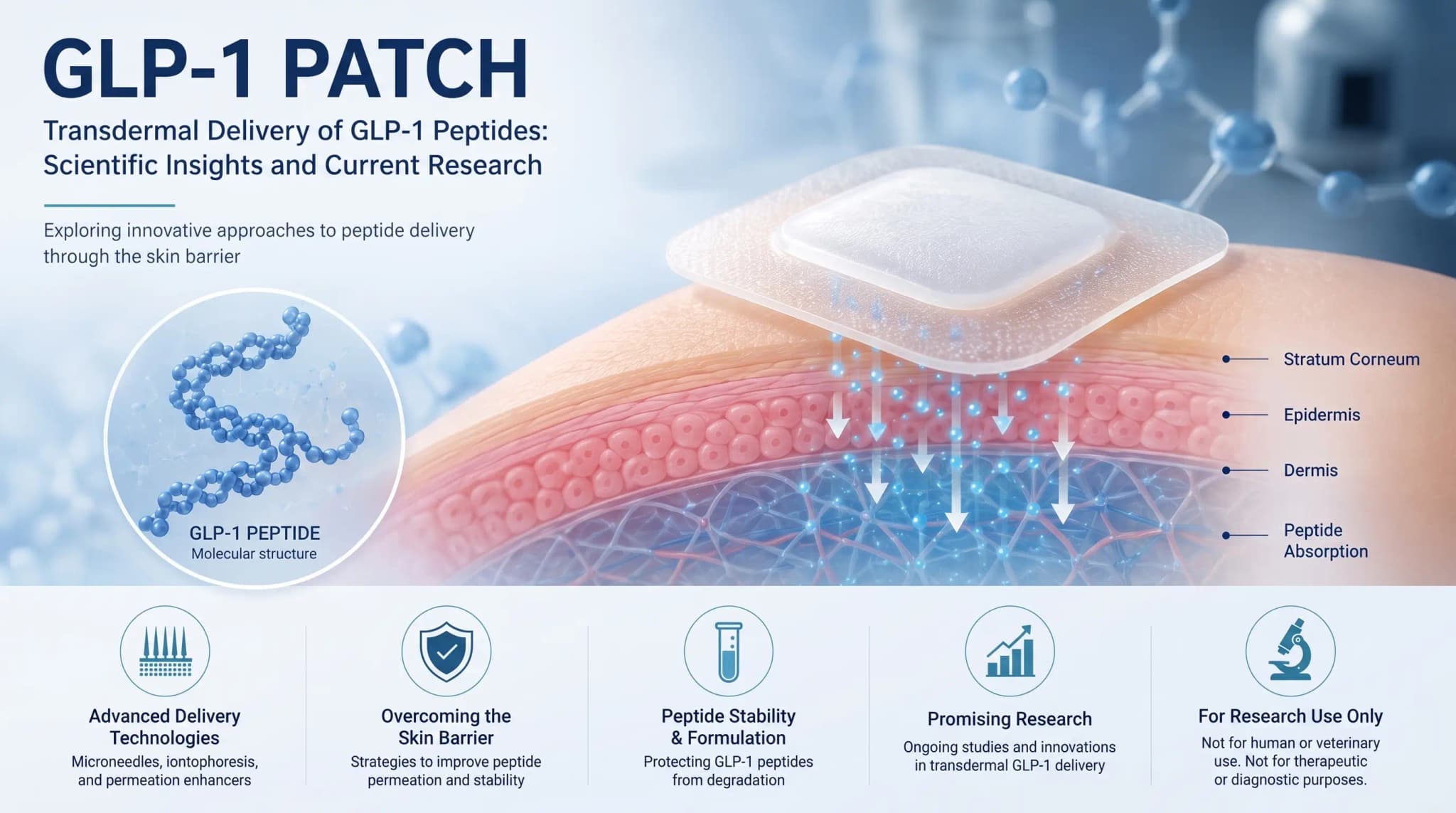
Research interest in the glp-1 patch has grown because peptide delivery across skin remains a difficult but important formulation problem. GLP-1 peptides are widely studied in metabolic regulation research, yet their physicochemical properties make conventional skin absorption inefficient. Accordingly, the glp-1 patch is best understood as a research concept within transdermal delivery science rather than a simple extension of small-molecule patch technology.
For laboratory research use only. Not intended for use in humans or animals. Not intended to diagnose, treat, cure, or prevent any disease.
Definition of GLP-1 and its biological significance
GLP-1, or glucagon-like peptide-1, is a peptide hormone generated from proglucagon processing in intestinal L cells and other tissues. It participates in signaling networks linked to nutrient sensing, secretion pathways, and metabolic regulation. In peptide research, GLP-1 peptides are examined because they interact with a defined receptor system and because their structure-function relationships are useful for formulation studies.
Researchers often focus on several core properties of GLP-1 peptides. For instance, the native peptide has a short biological half-life in circulation due to enzymatic degradation. Because of this instability, analog design, excipient selection, and delivery route all become central topics in peptide research.
A glp-1 patch is therefore not just a patch containing a peptide. Instead, it represents an attempt to combine peptide chemistry, patch technology, and barrier modulation into a workable transdermal delivery platform. However, the complexity of peptide transport across the stratum corneum means that this research area remains technically demanding.
Research feature | Why it matters in GLP-1 studies |
|---|---|
Peptide size | Larger molecules cross skin poorly |
Enzymatic sensitivity | Degradation can reduce measurable delivery |
Receptor specificity | Supports mechanistic laboratory investigation |
Structural flexibility | Influences formulation behavior |
Overview of transdermal delivery systems for peptides
Transdermal delivery systems are designed to move an active compound from a patch or skin-contacting matrix through the outer skin layers. Small lipophilic molecules are usually more compatible with this route. Peptides, by contrast, present major challenges because they are larger, more hydrophilic, and structurally delicate.
Several transdermal delivery approaches are investigated in peptide research. These include matrix patches, reservoir systems, microneedle-assisted formats, iontophoretic systems, and chemical permeation enhancer platforms. Additionally, hybrid systems may combine multiple strategies to improve skin absorption while preserving peptide integrity.
The glp-1 patch is often discussed alongside these enabling tools:
Microneedle arrays for bypassing the outer barrier
Iontophoresis for electrically assisted transport
Lipid or polymer carriers for encapsulation
Chemical enhancers that alter barrier organization
Hydrogel networks that manage hydration and release
Notably, most published work in this area is preliminary and model-specific. Some studies rely on in vitro diffusion cells, while others use ex vivo skin or animal model systems. Therefore, any interpretation of glp-1 patch research should be limited to the experimental context described by investigators.
Transdermal delivery remains attractive in peptide research because it offers a controlled interface between formulation and biological barrier. Nevertheless, the gap between concept and robust platform performance is still substantial. As a result, current scientific interest centers on optimizing formulation strategies, understanding skin transport mechanisms, and identifying research innovations that can support reproducible peptide flux.
Understanding GLP-1: A Peptide Hormone
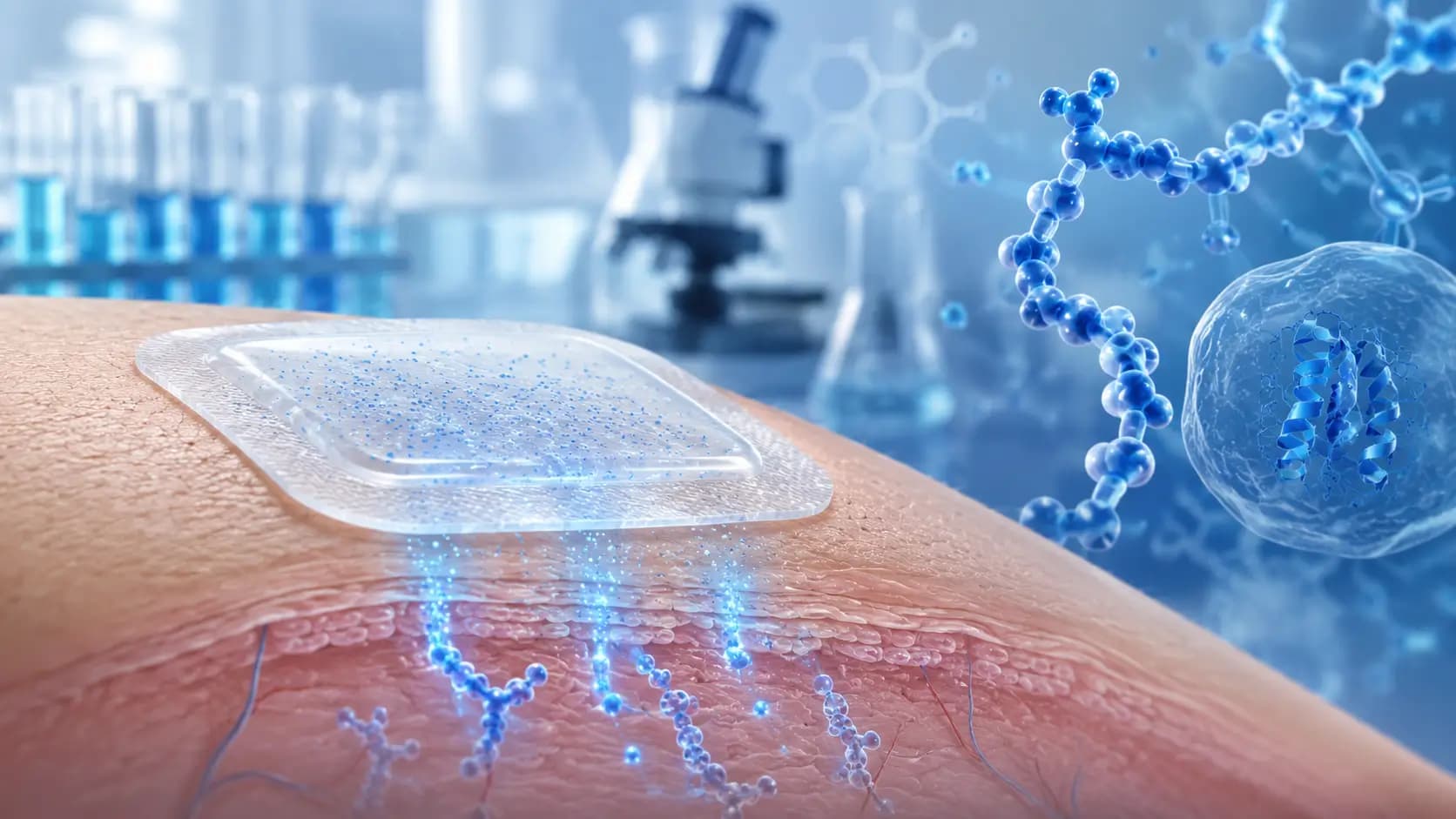
GLP-1 is a signaling peptide with a well-characterized role in nutrient-responsive physiology. In research settings, it is examined as part of broader endocrine and metabolic regulation networks. The glp-1 patch concept depends on understanding this peptide at the molecular and physiological levels, because delivery performance is tightly linked to peptide structure, receptor interaction, and degradation pathways.
Biology and physiology of GLP-1
GLP-1 originates from tissue-specific processing of the proglucagon precursor. It is produced primarily in enteroendocrine L cells, although related processing events occur in other tissues. During nutrient exposure, GLP-1 release contributes to coordinated signaling between the gastrointestinal tract, pancreas, nervous system, and other metabolic organs.
From a biochemical perspective, GLP-1 peptides are relatively large and hydrophilic compared with compounds commonly used in standard patch technology. Consequently, they do not readily partition into the lipid-rich outer skin barrier. This is one reason why the glp-1 patch remains an active area of peptide research rather than an established transdermal format.
Researchers also study GLP-1 because it is rapidly inactivated by enzymatic processes, including cleavage by dipeptidyl peptidase-4 in biological systems. Therefore, analog design and protective formulation approaches are frequently explored. In transdermal delivery research, this means the carrier system must address both transport and stability.
Key physiological research themes include:
Nutrient-triggered secretion dynamics
Receptor binding and downstream signaling
Enzymatic degradation pathways
Tissue distribution and clearance behavior
Interactions with broader metabolic regulation networks
The glp-1 patch is often framed as a delivery challenge for a biologically relevant peptide rather than a simple dosage-form substitution. In other words, the scientific value lies in testing whether a difficult biomolecule can be stabilized, transported, and released through skin in measurable amounts. That question has implications beyond GLP-1 alone, because many peptide candidates face similar barriers.
Mechanisms of action in metabolic regulation
GLP-1 acts through a G protein-coupled receptor that influences intracellular signaling cascades. These pathways are studied in relation to secretion, motility, neural signaling, and energy handling. However, in a formulation-focused article, the main relevance is that receptor-mediated activity requires the peptide to remain structurally intact through delivery and release.
A glp-1 patch must therefore preserve several critical attributes:
Attribute | Relevance to transdermal research |
|---|---|
Primary sequence integrity | Needed for receptor recognition studies |
Conformational stability | Affects degradation and release behavior |
Solubility profile | Influences matrix design and loading |
Diffusion potential | Determines measurable skin transport |
Because GLP-1 peptides are susceptible to hydrolysis, aggregation, and surface adsorption, formulation scientists investigate excipients that reduce these risks. Furthermore, pH conditions, moisture content, and polymer interactions can alter peptide stability. These factors matter greatly in any glp-1 patch prototype, since the peptide may remain in contact with patch materials for extended periods during testing.
Mechanistically, metabolic regulation research often examines GLP-1 within integrated signaling loops rather than as an isolated factor. Likewise, transdermal delivery research must consider the full system, including peptide chemistry, matrix architecture, barrier interaction, and release kinetics. A patch that loads a peptide is not necessarily a patch that delivers it across skin.
For this reason, peptide research on GLP-1 frequently combines analytical chemistry with permeation science. Investigators may measure peptide recovery, degradation products, diffusion rates, and receptor-binding retention after formulation exposure. Subsequently, these data help determine whether a glp-1 patch concept is chemically plausible, biologically interpretable, and technically reproducible.
The broader lesson is that GLP-1 serves as both a biologically significant peptide and a demanding model compound for transdermal delivery. Accordingly, the field continues to use GLP-1 peptides to test how far patch technology can be extended beyond traditional small molecules.
Transdermal Patch Technology: Principles and Applications

Transdermal systems are engineered to maintain close contact with skin while controlling the release of an incorporated compound. In the context of a glp-1 patch, the challenge is not merely housing the peptide in a thin device. Rather, the challenge is coordinating release, barrier interaction, and molecular preservation within a stable platform.
Basic structure and functioning of transdermal patches
Most patch technology formats share several core layers or functional elements. These typically include a backing layer, a drug-containing matrix or reservoir, an adhesive interface, and a release liner removed before application in experimental setups. However, peptide-oriented designs may also include microneedles, hydrogel domains, nanoparticle carriers, or electrically responsive components.
The basic operating principle is controlled transfer from the patch into the skin-contact region. For small molecules, passive diffusion may be enough. For GLP-1 peptides, passive diffusion is usually limited, so additional design features are often necessary.
Common patch components include:
Backing film to protect the formulation
Matrix or reservoir to hold the peptide
Adhesive layer to maintain skin contact
Permeation-modifying elements
Release-control materials
A glp-1 patch may be built as a matrix system, where the peptide is dispersed through a polymer network, or as a reservoir system, where the active material is confined in a separate compartment. Meanwhile, dissolving or coated microneedle patches represent a distinct category because they physically alter the barrier pathway.
Advantages of transdermal delivery for peptides
Transdermal delivery is attractive in peptide research because it offers a non-oral route that avoids direct gastrointestinal exposure. Since many peptides are unstable in digestive environments, alternative routes are often studied for comparative formulation purposes. Nevertheless, the term advantage should be understood as a theoretical or platform-level property, not as proof of successful delivery for every peptide.
Potential research advantages of a glp-1 patch include:
Potential feature | Research relevance |
|---|---|
Controlled release design | Supports kinetic studies |
Localized skin interface | Useful for barrier investigations |
Avoidance of GI environment | Relevant for peptide stability comparisons |
Modular platform design | Enables iterative formulation testing |
Additionally, patch technology allows investigators to tune hydration, polymer composition, and contact time in a controlled way. This is valuable when comparing formulation strategies across experimental models. For example, a hydrogel-based glp-1 patch can be evaluated against a microneedle-assisted format to determine which better supports measurable peptide flux.
However, the practical advantages are balanced by major constraints. Skin absorption of peptides remains low in many passive systems, and adhesive or matrix conditions may destabilize sensitive molecules. Therefore, the applications of a glp-1 patch are currently strongest in research innovation, formulation screening, and transdermal mechanism studies.
In peptide research more broadly, GLP-1 serves as a useful benchmark for examining whether advanced patch technology can extend transdermal delivery to larger biomolecules. Consequently, insights from glp-1 patch development may inform work on other peptide classes with similar physicochemical limitations.
Challenges in GLP-1 Patch Development
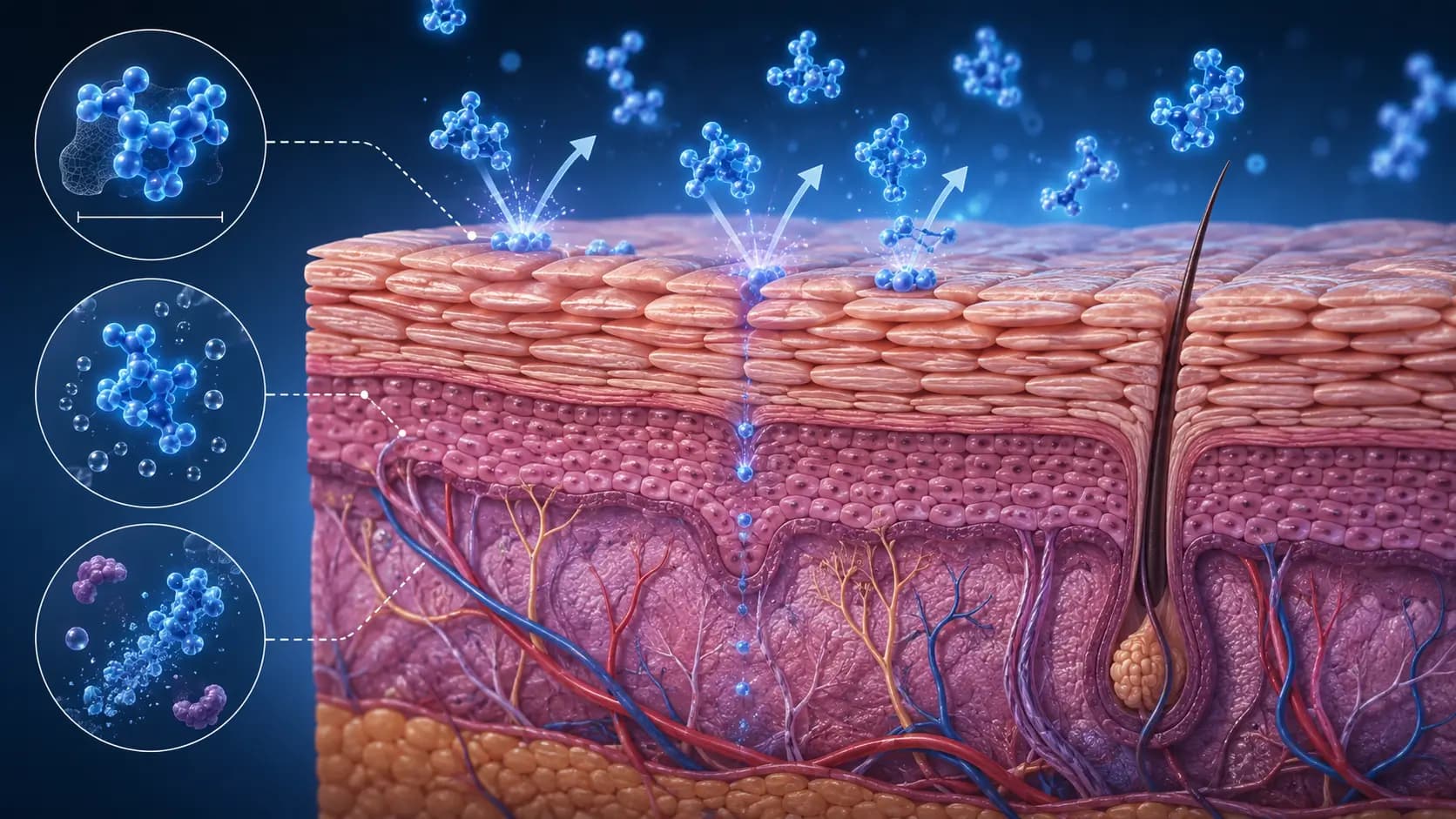
Developing a glp-1 patch requires solving several overlapping scientific problems at once. The peptide itself is difficult to transport, while the skin is designed to resist molecular entry. Therefore, progress in this area depends on understanding both molecular constraints and barrier biology in detail.
Molecular size limitations of GLP-1 peptides
One of the largest obstacles in glp-1 patch research is molecular size. GLP-1 peptides are much larger than the low-molecular-weight compounds that typically diffuse through skin with relative ease. Because transdermal delivery generally favors small, moderately lipophilic molecules, GLP-1 sits outside the ideal passive permeation range.
Size matters for several reasons. Larger molecules diffuse more slowly, interact differently with formulation matrices, and encounter stronger resistance at the stratum corneum. Additionally, hydrophilic peptides have poor partitioning into the lipid domains that dominate the outer barrier.
Researchers studying a glp-1 patch often monitor these peptide-related limitations:
Restricted passive diffusion
Low partitioning into skin lipids
Conformational instability
Aggregation risk in concentrated formulations
Surface adsorption to device materials
Another challenge is that molecular modifications intended to improve stability may alter transport behavior. For instance, adding lipidic moieties or polymer conjugates can change solubility and barrier interaction. However, these same changes may complicate release from the patch matrix or reduce analytical recovery during testing.
The glp-1 patch field therefore relies heavily on balancing trade-offs. A peptide analog that is more stable may be harder to release. Conversely, a formulation that increases release may expose the peptide to moisture or interfaces that accelerate degradation. In short, molecular size is not an isolated issue, since it interacts with nearly every other part of patch design.
Skin barrier properties affecting absorption
The skin barrier is the second major constraint. Its outermost layer, the stratum corneum, consists of corneocytes embedded in a lipid matrix that strongly limits the passage of water-soluble macromolecules. Accordingly, skin absorption of GLP-1 peptides through intact skin is usually minimal without some form of enhancement.
Barrier properties relevant to glp-1 patch development include both structural and dynamic factors. Thickness, hydration, lipid organization, anatomical site, and temperature can all influence permeation outcomes. Moreover, variability between human skin samples, animal model skin, and reconstructed membranes complicates study-to-study comparisons.
Barrier factor | Effect on peptide transport research |
|---|---|
Stratum corneum thickness | Alters diffusion resistance |
Lipid packing | Limits hydrophilic molecule passage |
Hydration state | Can modify permeability |
Skin source | Affects model comparability |
Enzymatic activity | May contribute to peptide breakdown |
Chemical permeation enhancers can disrupt or fluidize lipid domains, yet their impact on peptide delivery is often modest when used alone. Therefore, many glp-1 patch concepts combine enhancers with physical methods such as microneedles or iontophoresis. Nevertheless, each added technology introduces new variables, including peptide stability, manufacturing complexity, and analytical interpretation.
Barrier recovery is another research consideration. If a patch temporarily modifies the skin structure, investigators must determine how reproducible that modification is across samples. Subsequently, they need to assess whether observed transport reflects true peptide permeation or experimental artifact.
Because of these issues, glp-1 patch studies require careful model selection and transparent reporting. In vitro diffusion results may not align with ex vivo or animal model findings, and those findings remain preliminary. Thus, the central challenge is not simply getting GLP-1 into a patch, but creating a system that can reproducibly move intact peptide across a highly selective biological barrier.
Formulation Strategies for GLP-1 Transdermal Patches

Formulation design is the core of glp-1 patch research because peptide transport depends on more than one variable. Scientists must optimize peptide stability, matrix compatibility, release kinetics, and barrier interaction at the same time. As a result, formulation strategies for transdermal delivery are often multi-component and highly iterative.
Innovative formulation techniques
Several advanced approaches are being explored to improve the performance of a glp-1 patch. These approaches generally aim to either protect the peptide, increase skin absorption, or create a more favorable release environment. However, no single strategy solves all delivery obstacles.
One common direction is encapsulation within carriers such as liposomes, niosomes, polymeric nanoparticles, or other colloidal systems. These carriers may help shield GLP-1 peptides from degradation and alter how the formulation interacts with the skin surface. Nevertheless, encapsulation can also reduce loading efficiency or complicate release.
Another major strategy involves microneedle-enabled patch technology. In this format, microscopic projections create transient pathways through the outer barrier, allowing peptide-containing coatings or dissolving matrices to access deeper layers. Because this bypasses part of the stratum corneum resistance, microneedle systems are often among the most discussed glp-1 patch research innovations.
Additional formulation techniques include:
Hydrogel matrices for moisture-balanced peptide release
Iontophoretic systems for electrically assisted transport
Chemical permeation enhancers paired with polymer films
Peptide-lipid conjugate approaches
Layer-by-layer patch architectures
For example, a hydrogel-based glp-1 patch may improve local hydration, which can modify skin barrier properties and support diffusion at the interface. Similarly, iontophoresis can assist movement of charged peptide species under controlled laboratory conditions. Yet each method requires careful testing to distinguish increased transport from peptide degradation or analytical interference.
Factors influencing stability and efficacy
In research terms, efficacy refers to formulation performance in experimental systems rather than any consumer outcome. For a glp-1 patch, performance depends on whether intact peptide can be loaded, stored, released, and detected after interaction with skin or a model membrane. Therefore, stability is inseparable from delivery.
Important formulation factors include pH, ionic strength, moisture content, polymer composition, adhesive compatibility, and temperature exposure. Additionally, peptide concentration can influence aggregation, while surface contact with containers or patch layers can reduce recoverable material. These details are especially important for GLP-1 peptides because they are sensitive to environmental stress.
Formulation factor | Why researchers monitor it |
|---|---|
pH | Affects peptide integrity and solubility |
Water activity | Influences hydrolysis and matrix behavior |
Polymer type | Changes release profile and compatibility |
Adhesive chemistry | May alter stability or recovery |
Storage conditions | Impacts shelf stability in experiments |
Analytical methods are also part of formulation strategy. High-performance liquid chromatography, mass spectrometry, and bioassays may be used to verify that the peptide remains intact after formulation and permeation testing. Accordingly, a glp-1 patch cannot be evaluated by flux data alone, since transport of degraded fragments may not reflect the intended research compound.
Researchers frequently use stepwise optimization. First, they screen excipients for compatibility. Afterwards, they test loading and release. Subsequently, they evaluate skin absorption in diffusion systems and compare intact peptide recovery across conditions. This staged process helps identify whether failure occurs in stability, release, or barrier passage.
The most promising formulation strategies are often those that integrate multiple functions without excessive complexity. In other words, a successful glp-1 patch prototype would ideally protect the peptide, support measurable transdermal delivery, and remain manufacturable for further research. That remains a demanding target, yet ongoing work continues to refine the design space.
Current Research and Innovations in GLP-1 Patch Delivery

The current literature on glp-1 patch systems is best described as exploratory and technology-driven. Investigators are testing whether combinations of formulation science and barrier engineering can produce measurable peptide transport. Consequently, the field is generating valuable insights even when individual prototypes remain preliminary.
Recent studies and findings in GLP-1 transdermal research
Recent peptide research has focused on enabling technologies rather than passive patch formats alone. Microneedle-assisted delivery appears frequently in the literature because it can reduce dependence on passive skin absorption. Likewise, dissolving microneedle systems, coated microneedles, and hydrogel-forming arrays are being examined as possible platforms for GLP-1 peptides and related compounds.
Some studies use in vitro Franz diffusion cells with excised skin to compare formulation variables. Others rely on animal model research to examine peptide delivery patterns, retention, or pharmacokinetic signals after transdermal application. However, these findings are preliminary and model-dependent, so they should not be generalized beyond the specific systems tested.
Common observations in glp-1 patch research include:
Passive matrix patches often show limited peptide flux
Microneedle-enabled systems usually improve detectable transport
Encapsulation may support stability under some conditions
Electrical assistance can enhance movement of charged peptides
Skin model selection strongly affects reported outcomes
A recurring theme is that measurable delivery often requires some form of barrier bypass or active enhancement. Therefore, the phrase glp-1 patch may refer to a broad family of engineered skin-interface systems rather than a conventional adhesive film alone. This distinction is important for interpreting published findings.
Emerging technologies and future directions
Future glp-1 patch development is likely to involve more integrated systems. For instance, smart polymers may respond to moisture, temperature, or electrical input to regulate release. Meanwhile, microfabrication advances are improving the consistency of microneedle arrays and multilayer patch structures.
Another promising direction is the use of computational formulation tools. Researchers can model peptide diffusion, matrix interactions, and skin partitioning before physical prototypes are built. Consequently, development cycles may become more efficient, especially when combined with high-throughput screening of excipients and carrier materials.
Emerging area | Possible research contribution |
|---|---|
Smart polymers | Responsive release behavior |
Precision microneedles | More reproducible barrier access |
Nanocarrier optimization | Better peptide protection |
In silico modeling | Faster formulation screening |
Advanced analytics | Improved intact peptide tracking |
Research innovations are also improving analytical confidence. High-resolution mass spectrometry and peptide mapping can help distinguish intact GLP-1 from degradation products after patch exposure. In addition, imaging tools may clarify where peptide material localizes within skin layers, which is essential for understanding whether a glp-1 patch truly supports transdermal passage or only superficial deposition.
The future of this field will likely depend on convergence. Patch technology, peptide chemistry, materials science, and skin biology must work together for meaningful progress. Although a universally robust glp-1 patch platform has not been established in the literature, the research trajectory is informative for transdermal delivery as a whole.
Competitive sport organizations may restrict certain substances. Users are responsible for checking applicable rules.
Conclusion and Future Directions in GLP-1 Transdermal Research
The glp-1 patch represents a demanding but scientifically useful topic within peptide research. It sits at the intersection of transdermal delivery, biomaterial design, and metabolic regulation studies. Because GLP-1 peptides are large, hydrophilic, and structurally sensitive, they provide a stringent test case for advanced patch technology.
Summary of key insights
Several conclusions emerge from current research. First, passive skin absorption of GLP-1 peptides is generally limited by molecular size and barrier resistance. Second, formulation strategies such as encapsulation, hydrogel systems, and enhancer combinations can improve specific aspects of patch performance, although they do not eliminate all obstacles.
Third, microneedle-based approaches appear especially relevant because they address the outer barrier more directly. However, even these systems require careful attention to peptide stability, release behavior, and analytical verification. In summary, the glp-1 patch remains a research platform under active investigation rather than a simple finished-format solution.
Key points from this article include:
GLP-1 is a biologically significant peptide used in formulation research
Transdermal delivery of peptides is inherently challenging
Skin barrier properties strongly limit passive transport
Multi-modal patch technology is often necessary
Current findings are preliminary and model-specific
Potential impact on peptide delivery systems
The broader importance of glp-1 patch research extends beyond a single peptide class. If researchers can improve transdermal delivery for GLP-1 peptides, similar strategies may inform work on other macromolecules with poor passive permeability. Therefore, this field contributes to the general science of peptide stabilization, controlled release, and barrier engineering.
Future progress will likely come from integrated formulation strategies supported by strong analytics and reproducible skin models. Additionally, better understanding of skin absorption pathways may help refine which patch technology combinations are worth pursuing. In conclusion, the glp-1 patch is less a finished product category and more a valuable experimental framework for studying how complex peptides might be delivered through skin.
For laboratory research use only. Not intended for use in humans or animals. Not intended to diagnose, treat, cure, or prevent any disease.